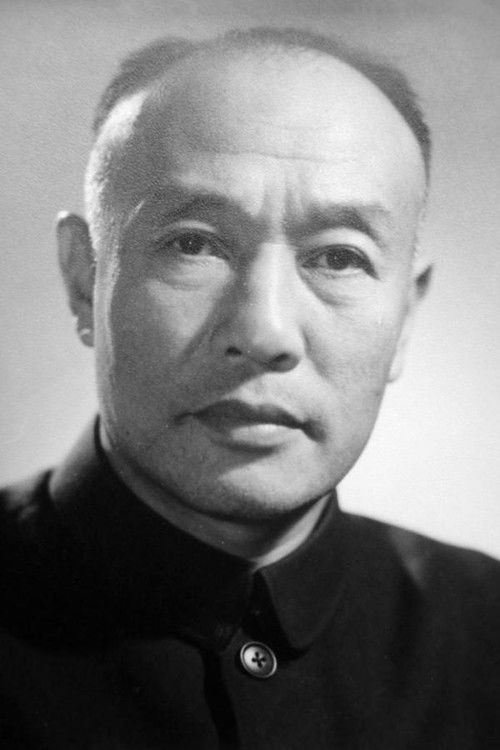
Cui Wei
Cui Wei (14 October 1912 – 7 February 1979), born Cui Jingwen, was a Chinese film director and actor. In 1962, Cui won the Hundred Flowers Award for Best Actor as Zhu Laogong in Keep Red Flag Flying (1960). Cui Jingwen was born on 14 October, 1912 into a poor peasant family. He started working at the age of twelve. Cui was able to attend a school in Qingdao due to the help of a relative but was expelled due to his Communist political activities. In 1930, having briefly studied scriptwriting at Shandong Provincial Experimental Theatre, he organized the Seagull Theatrical Troupe and wrote stage play scripts. In 1932, he joined the League of Left-Wing Dramatists and traveled to the east and north of China, performing in leftist activities to promote patriontism against the Japanese invasion. After studying theatre, Cui moved to Shanghai in 1935 and was a part of the leftist theatre movement. He adapted the play Lay Down Your Whip for street performances. In 1938, Cui joined the Chinese Communist Party (CCP) and taught at the Lu Xun College of Arts in Yan'an. In 1949, he was appointed as director of the Cultural Bureau of the Central and South China District. He was also elected deputy of the Third National People's Congress, member of the 5th National Committee of the Chinese People's Political Consultive Conference, and the China Federation of Literature and Art Circles. In 1954, Cui made his acting debut as the male lead in The Rebels (1955). In 1955, he quit his job at the CCP to join Beijing Film Studio and starred and multiple other films such as The Spirit of the Sea (1957), New Story of an Old Soldier (1959), and Keep Red Flag Flying (1960). For his performance in the latter, he won Best Actor at the 1st Hundred Flowers Awards. He also directed and co-directed films such as Song of Youth (1959), an adaptation from Yang Mo's novel of the same name, Zhang Ga, a Boy Soldier (1963), a children's film, and Women Warriors of the Yang Family (1960), which was an adaptation of a traditional opera. In 1966, Cui was repeatedly subjected to censorship and, in 1968, was imprisoned and sent to reform through labor. He was released in 1972.
崔嵬,1930年入山东实验剧院编剧班学习,次年参加中国左翼戏剧家联盟青岛分盟,后在上海、北平等地从事戏剧活动。1938年赴延安,同年加入中国共产党。曾任延安鲁艺教员、华北联合大学戏剧系主任、冀中军区火线剧社社长、华北大学文艺学院创作研究室主任。建国后,历任中原大学文艺学院、中南文艺学院院长,中南行政委员会文化局局长,北京电影制片厂导演、艺委会主任,中国文联第三届委员,中国剧协第一届常务理事,中国影协第二、三届常务理事。是第三届全国人大代表、第五届全国政协委员。主演的影片有《宋景诗》、《老兵新传》,在《红旗谱》中饰朱老忠,1962年获第一届电影百花奖最佳电影男演员奖。与人合导的影片有《青春之歌》等。《杨门女将》1962年获第一届电影百花奖戏曲片奖,《小兵张嘎》1980年获第二次全国少年儿童文艺创作奖一等奖。1979年2月7日逝世。
崔嵬,1930 年入山東實驗劇院編劇班學習,次年參加中國左翼戲劇家聯盟青島分盟,後在上海、北平等地從事戲劇活動。1938 年赴延安,同年加入中國共產黨。曾任延安魯藝教員、華北聯合大學戲劇系主任、冀中軍區火線劇社社長、華北大學文藝學院創作研究室主任。建國後,歷任中原大學文藝學院、中南文藝學院院長,中南行政委員會文化局局長,北京電影製片廠導演、藝委會主任,中國文聯第三屆委員,中國劇協第一屆常務理事,中國影協第二、三屆常務理事。是第三屆全國人大代表、第五屆全國政協委員。主演的影片有《宋景詩》、《老兵新傳》,在《紅旗譜》中飾朱老忠,1962 年獲第一屆電影百花獎最佳電影男演員獎。與人合導的影片有《青春之歌》等。《楊門女將》1962 年獲第一屆電影百花獎戲曲片獎,《小兵張嘎》1980 年獲第二次全國少年兒童文藝創作獎一等獎。1979 年 2 月 7 日逝世。