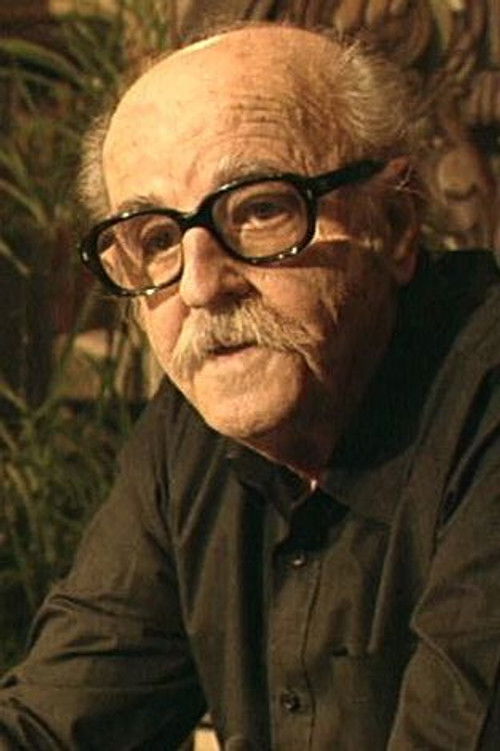
Grigoris Grigoriou
Grigoris Grigoriou (1919–2005) was a Greek screenwriter and film director. Grigoriou was a Greek director. He was the son of the then well-known lawyer Michalis Grigoriou. He studied law and political science at the University of Athens, as well as foreign languages, took lessons in the theater department of the University Club but eventually became a self-taught director. During the German Occupation, he took part in the Battle of Crete, he was eventually captured by the Germans, escaped and then joined and fought through the lines of the EAM (National Liberation Front). From 1942 to 1949 he worked in the Legal Department of AETE (the predecessor of today's Hellenic Telecommunications Organisation). A film director since 1949 and theater since 1951. In 1948 he wrote the script and directed his first film The Red Cliff. His film Bitter Bread (1951) is considered a landmark for Greek cinema as the first neorealist Greek film in which he combined Italian neorealism with Greek reality criticizing the authorities. He stopped his film activity in 1971 with thirty feature films to his credit. Also, Grigoris Grigoriou directed many plays at the radio theater of the state radio, while from 1949 he was a co-founder of the Lykourgos Stavrakos Film School and from 1957 a professor of the Drama School. His presence in television was also intense with his direction in Immortal Love Stories and Kapodistrias as well as in a series of plays on ERT. The television series of the literary work Loxandra was a great success, as was the show Na i Efkairia, which contributed to the emergence of new artists. From 1984 to 1990 he presented and moderated the weekly show In the Area of Greek Cinema. He was the president of the Society of Greek Directors and, apart from the directing awards, he was also honored with an award from the Ministry of Culture. He spoke French and was a permanent resident of Ilioupoli, Athens. With his first wife Maria Papaleonardou, he had a child, the composer Michalis Grigoriou. He then married the actress Inta Hristinaki without having children and finally Eleni Tsimaratou in 1960 with whom he had two children, the musician Lefteris Grigoriou and the diving instructor-director Stelios Grigoriou.
Γεννήθηκε στην Αθήνα (τον Ιούνιο του 1919), γιος του γνωστού τότε δικηγόρου Μιχάλη Γρηγορίου. Σπούδασε Νομική και πολιτικές επιστήμες στο Πανεπιστήμιο Αθηνών, καθώς και ξένες γλώσσες, πήρε μαθήματα στο θεατρικό τμήμα της Πανεπιστημιακής Λέσχης αλλά τελικά έγινε αυτοδίδακτος σκηνοθέτης. Κατά την περίοδο της κατοχής, έλαβε μέρος στη μάχη της Κρήτης, συνελήφθη από τους Γερμανούς, δραπέτευσε και έπειτα προσχώρησε και πολέμησε μέσα από τις γραμμές του ΕΑΜ. Από το 1942 μέχρι το 1949 εργάστηκε στο Νομικό Τμήμα της ΑΕΤΕ (την προκάτοχο του σημερινού ΟΤΕ). Σκηνοθέτης κινηματογράφου από το 1949 και του θεάτρου από το 1951. Το 1948 έγραψε το σενάριο και σκηνοθέτησε την πρώτη του ταινία Ο Κόκκινος Βράχος. Η ταινία του Πικρό ψωμί (1951) θεωρείται σταθμός για τον ελληνικό κινηματογράφο ως η πρώτη νεορεαλιστική ελληνική ταινία στην οποία συνδύασε τον Ιταλικό νεορεαλισμό με την ελληνική πραγματικότητα ασκώντας κριτική στην εξουσία. Σταμάτησε την κινηματογραφική του δραστηριότητα το 1971 με τριάντα μεγάλου μήκους ταινίες στο ενεργητικό του. Επίσης σκηνοθέτησε και πολλά θεατρικά έργα στο ραδιοφωνικό Θέατρο της Δευτέρας της κρατικής ραδιοφωνίας, ενώ από το 1949 υπήρξε συνιδρυτής της Κινηματογραφικής Σχολής του Λυκούργου Σταυράκου και από το 1957 καθηγητής Δραματικής Σχολής. Έντονη ήταν και η παρουσία του στην τηλεόραση με τη σκηνοθεσία του στις "Αθάνατες ιστορίες αγάπης", "Καποδίστριας" καθώς και σε σειρά θεατρικών έργων στην ΕΡΤ. Η τηλεοπτική σειρά του λογοτεχνικού έργου Λωξάντρα γνώρισε μεγάλη επιτυχία όπως και η εκπομπή Να η ευκαιρία που συνέβαλε στην ανάδειξη νέων καλλιτεχνών. Από το 1984 μέχρι το 1990 παρουσίαζε και συντόνιζε την εβδομαδιαία εκπομπή Στον χώρο του ελληνικού κινηματογράφου. Υπήρξε Πρόεδρος της Εταιρίας Ελλήνων Σκηνοθετών και εκτός των βραβείων σκηνοθεσίας τιμήθηκε και με βραβείο του Υπουργείου Πολιτισμού (Ελλάδος). Μιλούσε Γαλλικά και ήταν μόνιμος κάτοικος Ηλιούπολης (Αθήνα). [Πηγή: wikipedia]