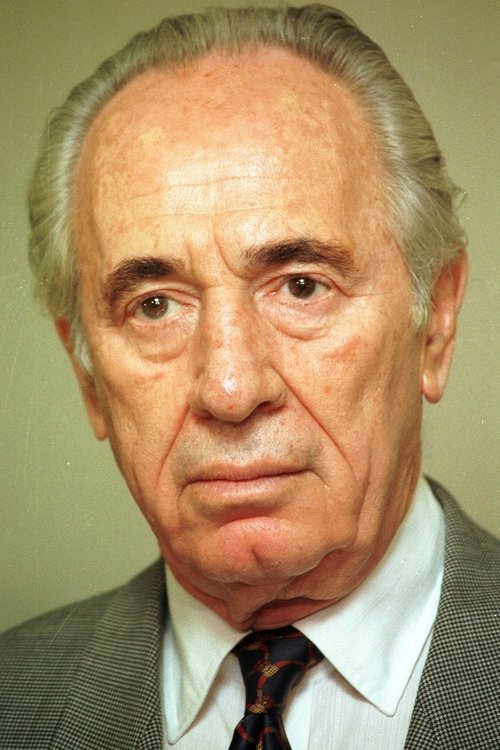
Shimon Peres
Shimon Peres (Hebrew: שמעון פרס; born Szymon Perski; 2 August 1923 – 28 September 2016) was an Israeli politician and statesman who served as the prime minister of Israel from 1984 to 1986 and from 1995 to 1996 and as the president of Israel from 2007 to 2014. He was a member of twelve cabinets and represented five political parties in a political career spanning 70 years. Peres was elected to the Knesset in November 1959 and except for three months out of office in early 2006, served as a member of the Knesset continuously until he was elected president in 2007. Serving in the Knesset for 48 years (with the first uninterrupted stretch lasting more than 46 years), Peres is the longest serving member in the Knesset's history. At the time of his retirement from politics in 2014, he was the world's oldest head of state and was considered the last link to Israel's founding generation, as well as the last Prime Minister to make aliyah rather than being born on territory that would become Israel. From a young age, he was renowned for his oratorical brilliance, and was chosen as a protégé by David Ben-Gurion, Israel's founding father. He began his political career in the late 1940s, holding several diplomatic and military positions during and directly after the 1948 Arab–Israeli War. His first high-level government position was as deputy director general of defense in 1952 which he attained at the age of 28, and director general from 1953 until 1959. In 1956, he took part in the historic negotiations on the Protocol of Sèvres, which was described by British prime minister Anthony Eden as the "highest form of statesmanship". In 1963, he held negotiations with U.S. President John F. Kennedy, which resulted in the sale of Hawk anti-aircraft missiles to Israel, the first sale of U.S. military equipment to Israel. Peres represented Mapai, Rafi, the Alignment, Labor and Kadima in the Knesset, and led Alignment and Labor. Peres first succeeded Yitzhak Rabin as acting prime minister briefly during 1977, before becoming prime minister from 1984 to 1986. As foreign minister under Prime Minister Rabin, Peres engineered the 1994 Israel–Jordan peace treaty, and won the 1994 Nobel Peace Prize together with Rabin and Yasser Arafat for the Oslo Accords peace talks with the Palestinian leadership. In 1996, he founded the Peres Center for Peace, which has the aim of "promot[ing] lasting peace and advancement in the Middle East by fostering tolerance, economic and technological development, cooperation and well-being." After suffering a stroke, Peres died in 2016 near Tel Aviv. ... Source: Article "Shimon Peres" from Wikipedia in English, licensed under CC-BY-SA.
Shimon Peres (en hébreu: שמעון פרס, en arabe: شمعون بيرس), né Szymon Perski le 2 août 1923 à Wiszniew (en Pologne à l'époque, actuellement en Biélorussie) et mort le 28 septembre 2016 à Ramat Gan (Israël), est un homme d'État israélien. Il est Premier ministre d'Israël en 1977 (par intérim), de 1984 à 1986 et de 1995 à 1996, puis président de l'État d'Israël de 2007 à 2014.Après une carrière diplomatique entamée à la suite de la guerre d'indépendance israélienne, il devient haut fonctionnaire au service du gouvernement israélien comme directeur adjoint, puis directeur général du ministère de la Défense entre 1953 et 1959. Il entre ensuite en politique.Membre du Mapaï, du Rafi puis du Parti travailliste, il siège comme ministre au sein de douze gouvernements, ce qui lui confère une longévité inédite. Il occupe à trois reprises la fonction de Premier ministre entre 1977 et 1996. Respecté dans le monde occidental, il reçoit, avec Yasser Arafat et Yitzhak Rabin, le prix Nobel de la paix 1994 pour sa participation aux pourparlers de paix avec les Palestiniens ayant mené aux accords d'Oslo.Après avoir rejoint le parti centriste Kadima, fondé par Ariel Sharon, il est élu à la présidence de l'État d'Israël lors de l'élection de 2007, devenant ainsi le premier ancien chef du gouvernement désigné chef de l'État dans l'histoire d'Israël. À l’issue de son septennat, âgé de 90 ans, il met un terme à sa carrière politique.Après la mort d'Ariel Sharon en 2014, Shimon Peres était le dernier survivant de la génération des «pères fondateurs» de l'État d'Israël.La famille de Szymon Perski émigre vers Tel Aviv en 1934, alors que ce dernier est âgé de 11 ans. Il suit des études à l'école de Geula de Tel Aviv, puis à l'école agricole de Ben-Shemen. Il vit dans un kibboutz durant plusieurs années.En 1941, il est élu secrétaire du Hanoar Haoved Véhalomed, un mouvement de jeunesse socialiste et sioniste. En 1944, il retourne au kibboutz Alumot, où il avait reçu une formation agricole et avait travaillé comme agriculteur et comme berger.En 1947, Shimon Peres s'enrôle dans la Haganah, prédécesseur de l'Armée de défense d'Israël. David Ben Gourion le désigne responsable du personnel et des achats d'armes. Il est nommé à la tête du service naval quand Israël reçoit son indépendance en 1948.Il est nommé, en 1953, directeur général du ministère de la Défense, quatre ans après sa rencontre avec le Premier ministre David Ben Gourion. À cette fonction, il s'implique particulièrement dans l'achat d'armes pour le jeune État d'Israël, ce qui contribue à en faire la 6e puissance atomique mondiale. ...Source: Article "Shimon Peres" de Wikipédia en français, soumis à la licence CC-BY-SA.
Acting (27)