Jacques Laffite
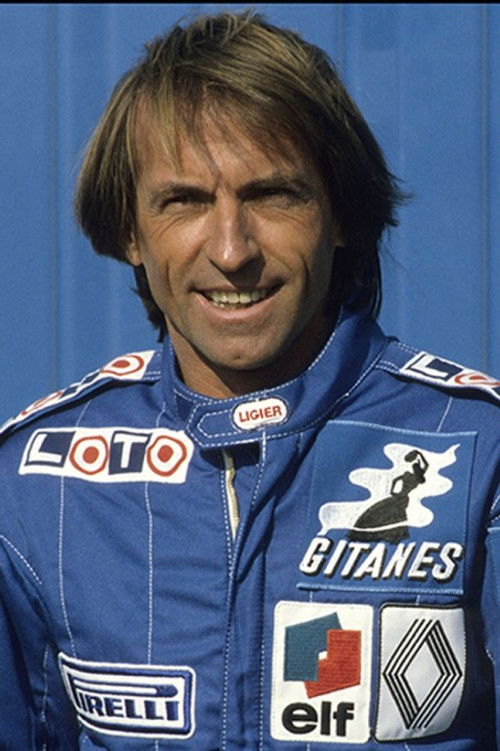
Jacques-Henri Laffite (born 21 November 1943) is a French former racing driver who competed in Formula One from 1974 to 1986. He achieved six Grand Prix wins, all while driving for the Ligier team. From 1997 to 2013, Laffite was a presenter for TF1. Jacques-Henri Laffite was born in Paris on 21 November 1943. He attended the Cours Hattemer, a private school. Laffite debuted in Formula One in 1974 for Frank Williams' Iso–Marlboro team. The following year he raced for the same team, now named Williams, scoring a second place in the German Grand Prix at the Nürburgring. In 1976 Laffite moved to the French Ligier team, scoring 20 points and a pole position at the Italian Grand Prix. The next two seasons were transitional, although he managed to win his first Grand Prix at Anderstorp in the 1977 Swedish Grand Prix. The 1979 season opened with Laffite winning the first two races. He fought for the World Championship title until the last races, but eventually placed only fourth, with 36 points. The following two seasons were similar, with two more fourth places in the Championship and a further three victories. In 1982, however, Laffite finished only 17th in the final classification, with only 5 points scored. During the early 1980s, Laffite also made three end of season trips to Australia to race in the non-championship Australian Grand Prix. He failed to finish his first race in 1981 (he was lucky to start after his car hit the wall on the outside of the last turn of the short (1.609 km (1.000 mi)) Calder Park Raceway in qualifying, but his local crew were able to repair it for the race). He finished second to fellow Frenchman Alain Prost in 1982, and third behind Brazilian Roberto Moreno and Australian John Smith in 1983. In all of his pre-Formula One AGP drives, Laffite drove a Formula Pacific or Formula Mondial Ralt RT4 powered by a 1.6-litre Ford l4 engine. Results in the next two seasons were not much better, when he moved back to England, again to race for Williams (11 and 5 points, respectively). Now in his forties, Laffite returned to Ligier in 1985: in that season he was on the podium three times (Great Britain, Germany and Australia), for a total of 16 points. In 1986 he scored 14 points including two more podium finishes in the first half of the season, but he broke both legs in a crash at the start of the British Grand Prix at Brands Hatch, and thereafter retired from Formula One. The race was stopped and restarted without Laffite, who was thus classified as a non-starter and ended his career tied with Graham Hill for the most Grand Prix starts. He was the most successful driver in Ligier's history, having taken six of their nine wins. As a result of Laffite's injuries, new safety rules were enforced from the 1988 season that stated that in all cars the driver's feet must be behind the front axle line. Laffite recovered from his injuries and later raced in touring cars, finishing 17th in the inaugural World Touring Car Championship driving an Alfa Romeo 75 for Alfa Corse as well as racing three seasons in the German-based DTM series. ... Source: Article "Jacques Laffite" from Wikipedia in English, licensed under CC-BY-SA 3.0.
Jacques Laffite, né le 21 novembre 1943 à Paris, est un pilote automobile français. Il a notamment disputé 176 Grands Prix de Formule 1 et remporté six victoires entre 1974 et 1986. De 1997 à 2012, il commente en qualité de consultant les Grands Prix de F1 pour la chaîne de télévision française TF1. Il est le père de Margot Laffite, journaliste sportive et le beau-frère de Jean-Pierre Jabouille. Fils d'un avocat parisien, Jacques Laffite passe son enfance dans le monde de la haute bourgeoisie française et fréquente des bonnes écoles. Ses intérêts étaient déterminés par le sport, il devient un bon joueur de tennis, skieur et patineur. À 14 ans à l'hiver 1958, il rencontre à la patinoire Molitor dans le 16e arrondissement de Paris, son futur beau-frère Jean-Pierre Jabouille, déjà champion de patinage de vitesse à 15 ans; les deux seront plus tard diplômés ensemble à l'armée. Après avoir échoué à obtenir son diplôme d'études secondaires, il travaille comme mécanicien pour Jabouille. Sans grandes connaissances en mécanique, Jabouille et Laffite ont toujours malgré tout réussi à faire tourner leur voiture. En 1966, Jean-Pierre Jabouille lui propose de devenir son mécanicien lors des épreuves de la Coupe Renault 8 Gordini. Après ses premiers succès en tant que pilote, Jabouille attire, en 1968, l'attention de l'industriel français Hubert Giraud qui demande pourquoi Laffite ne pilote pas; lorsqu'il apprend qu'il est sans le sou, il lui finance une voiture de course de Formule France. Laffite devant construire sa voiture lui-même, il lui faut du temps avant qu'il puisse disputer ses premières courses. Il profite de l'intervalle pour s'inscrire à l'École Winfield (dont le "W" et le nom figure sur une série de vignettes autour de son casque couleur "British Racing Green", durant le reste de sa carrière de pilote). Une deuxième place obtenue dans une compétition junior lui assure une saison payée en Formule 3. Ainsi, sa carrière commence de manière beaucoup plus professionnelle que prévu. En 1970, Jacques Laffite, passé en Formule Renault, vit une saison désastreuse: les voitures de Formule Renault, dangereuses et rapides, sont conduites par de jeunes pilotes fougueux et imprudents alors que Laffite, âgé de 27 ans, n'est pas disposé à prendre autant de risques qu'eux. En 1971, il partage son cockpit avec Dominique Royer, un riche pilote automobile amateur, et s'entend mieux avec ses concurrents après une première saison de familiarisation. Laffite remporte ses premières victoires à Albi et au Paul Ricard et termine cinquième du championnat. En 1972, Laffite rejoint l'équipe BP Racing, domine la saison sur un châssis Martini avec douze victoires et remporte son premier titre majeur. Il participe la même année aux 24 heures du Mans avec Pierre Maublanc, de quinze ans son aîné, sur Ligier JS2. En 1973, il devient champion de France de Formule 3 avec une Martini MK12-Ford du team Oreca et remporte également le Grand Prix de Monaco de Formule 3. ... Source: Article "Jacques Laffite" de Wikipédia en français, soumis à la licence CC-BY-SA 3.0.
Acting (7)