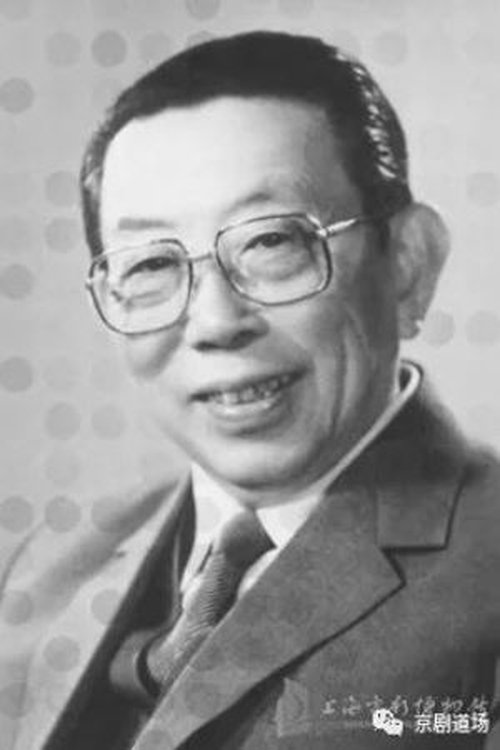
Cheng Zhi
Zhi Cheng Zhi was born on February 3, 1926 in Wuchang, Hubei. Two years later he moved to Shanghai with his grandfather, tenth-ranking scholar. Grandfather was proficient in poetry, calligraphy, and seal engraving. At the end of the Qing Dynasty, he was the supervisor of the Yuelu Academy in Hunan. He has more than ten albums, and has compiled and published many representative works of the Tan School. He was employed as a librarian in the Shanghai Museum of Cultural History in the late 1950s. Young Zhi Cheng has loved Peking Opera since he was young. He returned to La Jinghu without a teacher at the age of six. He broadcasted on the radio at the age of eight and sang Peking opera. At the age of eleven, he produced the Peking Opera record "Yu Guo Yuan". After graduating from high school in 1944, Cheng was admitted to the Fudan Department of Economics. Because of his passion for acting, he participated in a charity fundraising event sponsored by Shen Bao at the time during his studies in Fudan. The repertoire for the free performance is "Rich Clouds", directed by Huang Zuolin. On January 1, 1945, Cheng Zhi dropped out of school to perform a drama. He joined the hard work troupe led by Huang Zuolin and has since embarked on an acting career that he has worked for all his life. In 1947, Cheng Zhi entered Mandarin Pictures. The first film he participated in was "Fake Phoenix", in which he played "Hairdresser No.5". In the film, the hairdresser No.5 sang a popular song of self-singing and singing, which left a deep impression on the audience. impression. After succesuful debut Zhi Cheng shot more than a dozen films such as "Night Club" and "Corrosion". In 1952, eight private film companies in Shanghai merged to form the Shanghai United Film Studio. In 1953 "Lianying" was incorporated into the Shanghai Film Studio. During this period, Zhi Cheng has participated in the filming of "My Life" and "Related Directors". In the mid-fifties, Cheng Zhi donated airplane cannons to perform Beijing opera "Empty City Plan" and "Capturing Cao", etc., and recorded the radio programs Peking Opera chanting and cross talk for Taiwan People's Broadcasting Station and Fujian People's Broadcasting Station. To enable the people of Taiwan to understand the motherland and contribute to the exchanges across the Taiwan Straits. The Cultural Revolution began in 1966, Zhi Cheng was not spared, and the revolutionary masses became "objects of revolution" overnight. In July 1967, he was ordered to stay in the factory to inspect and participate in the so-called "study class", that is, the "isolation review" in disguise. One pass was ten months. In May 1968, the class ended. In 1969, a large number of people in the film system were decentralized to work in the "May 7th" cadre school in Fengxian. Zhi Cheng was still the "censorship object" and worked in the "cadre school" for four years.
1945年程之参加上海剧艺实验剧团,成为职业演员。1947年进入文华影片公司,出演喜剧影片《假凤虚凰》,由话剧演员转为电影演员。1950年参演石挥执导的剧情片《我这一辈子》,凭借该片获得文化部颁发的优秀表演银质奖章 。1953年加入上海电影制片厂,参演石挥执导的故事片《鸡毛信》。1954年出演王为一执导的反特电影《山间铃响马帮来》。1959年参演冯喆执导的惊险片《沙漠追匪记》。1962年参演桑弧执导的喜剧片《魔术师的奇遇》。1963年出演的战争电影《红日》。1980年出演颜碧丽执导的爱情喜剧片《爱情啊,你姓什么?》。1981年主演剧情电影《御马外传》。1983年执导古装电视剧《天下第一关》。1984年主演张刚执导的喜剧片《愁眉笑脸》。1985年自导自演的电视剧《名优之死》在央视播出。1986年中央电视台播出神话剧《西游记》,他在剧中饰演金池长老,同年参演张刚执导的喜剧故事片《多情的帽子》。1991年,出演张刚执导的喜剧片《多管闲事》。1994年和赵忠祥、宋世雄合作主持中央电视台春节联欢会(戏曲组)。 1995年2月14日,程之因心肌梗塞病逝,享年69岁。
1945 年程之參加上海劇藝實驗劇團,成為職業演員。1947 年進入文華影片公司,出演喜劇影片《假鳳虛凰》,由話劇演員轉為電影演員。1950 年參演石揮執導的劇情片《我這一輩子》,憑藉該片獲得文化部頒發的優秀表演銀質獎章 。1953 年加入上海電影製片廠,參演石揮執導的故事片《雞毛信》。1954 年出演王為一執導的反特電影《山間鈴響馬幫來》。1959 年參演馮喆執導的驚險片《沙漠追匪記》。1962 年參演桑弧執導的喜劇片《魔術師的奇遇》。1963 年出演的戰爭電影《紅日》。1980 年出演顏碧麗執導的愛情喜劇片《愛情啊,你姓什麼?》。1981 年主演劇情電影《禦馬外傳》。1983 年執導古裝電視劇《天下第一關》。1984 年主演張剛執導的喜劇片《愁眉笑臉》。1985 年自導自演的電視劇《名優之死》在央視播出。1986 年中央電視台播出神話劇《西遊記》,他在劇中飾演金池長老,同年參演張剛執導的喜劇故事片《多情的帽子》。1991 年,出演張剛執導的喜劇片《多管閒事》。1994 年和趙忠祥、宋世雄合作主持中央電視台春節聯歡會(戲曲組)。 1995 年 2 月 14 日,程之因心肌梗塞病逝,享年 69 歲。
Acting (36)
