Sonny Rollins
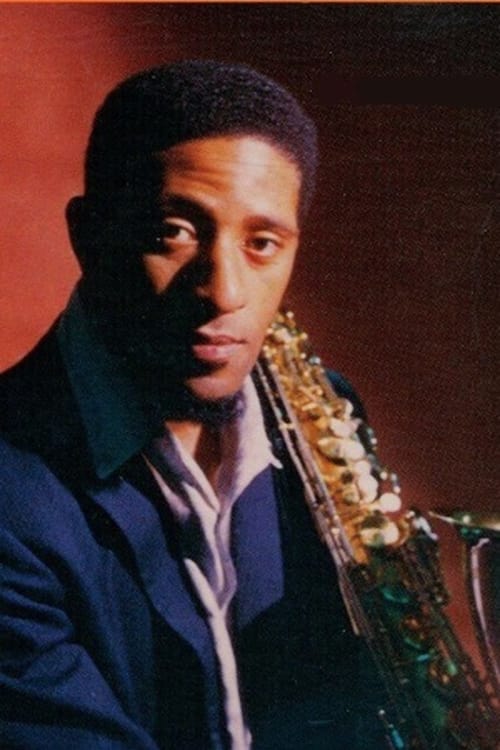
Walter Theodore "Sonny" Rollins (September 7, 1930 - May 25, 2026) was an American jazz tenor saxophonist who is widely recognized as one of the most important and influential jazz musicians. In a seven-decade career, he has recorded over sixty albums as a leader. A number of his compositions, including "St. Thomas", "Oleo", "Doxy", "Pent-Up House", and "Airegin", have become jazz standards. Rollins has been called "the greatest living improviser" and the "Saxophone Colossus". Rollins was born in New York City to parents from the United States Virgin Islands. The youngest of three siblings, he grew up in central Harlem and on Sugar Hill, receiving his first alto saxophone at the age of seven or eight. He attended Edward W. Stitt Junior High School and graduated from Benjamin Franklin High School in East Harlem. Rollins started as a pianist, changed to alto saxophone, and finally switched to tenor in 1946. During his high school years, he played in a band with other future jazz legends Jackie McLean, Kenny Drew, and Art Taylor. After graduating from high school in 1948, Rollins began performing professionally; he made his first recordings in early 1949 as a sideman with the bebop singer Babs Gonzales (trombonist J. J. Johnson was the arranger of the group). Within the next few months, he began to make a name for himself, recording with Johnson and appearing under the leadership of pianist Bud Powell, alongside trumpeter Fats Navarro and drummer Roy Haynes, on a seminal "hard bop" session. In early 1950, Rollins was arrested for armed robbery and spent ten months in Rikers Island jail before being released on parole; in 1952, he was re-arrested for violating the terms of his parole by using heroin. Between 1951 and 1953, he recorded with Miles Davis, the Modern Jazz Quartet, Charlie Parker, and Thelonious Monk. A breakthrough arrived in 1954 when he recorded his famous compositions "Oleo", "Airegin", and "Doxy" with a quintet led by Davis that also featured pianist Horace Silver, these recordings appearing on the album Bags' Groove. In 1955, Rollins entered the Federal Medical Center, Lexington, at the time the only assistance in the U.S. for drug addicts. While there, he volunteered for then-experimental methadone therapy and was able to break his heroin habit, after which he lived for a time in Chicago, briefly rooming with the trumpeter Booker Little. Rollins initially feared sobriety would impair his musicianship, but then went on to greater success. Rollins briefly joined the Miles Davis Quintet in the summer of 1955. Later that year, he joined the Clifford Brown–Max Roach quintet; studio albums documenting his time in the band are Clifford Brown and Max Roach at Basin Street and Sonny Rollins Plus 4. After the deaths of Brown and the band's pianist, Richie Powell, in a June 1956 automobile accident, Rollins continued playing with Roach and began releasing albums under his own name on Prestige Records, Blue Note, Riverside, and the Los Angeles label Contemporary. ... Source: Article "Sonny Rollins" from Wikipedia in English, licensed under CC-BY-SA 3.0.
Sonny Rollins, né Theodore Walter Rollins le 7 septembre 1930 à New York, est un saxophoniste ténor et compositeur de jazz. Il est largement reconnu comme l'un des musiciens de jazz les plus importants et influents de l'ère post-bebop. La longue et prolifique carrière de Sonny Rollins au saxophone ténor commence vers l'âge de 16 ans. Certaines de ses compositions comme St. Thomas, Oleo, Doxy et Airegin sont devenues des standards de jazz. Ses soixante-cinq ans de carrière lui donnent aujourd'hui le statut de dernier géant en activité des années 2020. Improvisateur, croisant les genres, poussant à leurs limites le son et le phrasé, Sonny Rollins incarne l'esprit de quête inlassable du jazz. Sonny Rollins est toujours en tournée en 2013 après avoir survécu à la plupart de ses contemporains en compagnie desquels il enregistra, tels John Coltrane, Miles Davis, Max Roach et Art Blakey. Bien que Sonny Rollins soit né à New York, pas très loin des temples de la musique noire new-yorkaise comme Le Savoy ou l'Apollo, ses parents sont originaires des Îles Vierges américaines. Sonny Rollins commence par jouer du piano puis passe au saxophone alto qu'il reçoit à l'âge de 8 ans, s'y exerce à la façon de Louis Jordan et choisit par la suite le saxophone ténor en 19463. Impressionné par Charlie Parker et pris sous l'aile de Thelonious Monk, le jeune Sonny Rollins fait ses classes professionnelles à l'école du bebop, dès la fin des années 1940. Pendant ses années d'études au lycée, il joue dans un groupe avec d'autres futures légendes du jazz, Jackie McLean et Kenny Drew. Ses premiers enregistrements pour le label Fantasy révèlent une sonorité originale et instantanément identifiable, pour partie héritée de Coleman Hawkins, une maîtrise rythmique et harmonique hors du commun et déjà un certain penchant pour la déconstruction/reconstruction du thème. Il enregistre en 1949 avec Babs Gonzales puis la même année avec J.J Johnson et Bud Powell. Dans ses enregistrements jusqu'en 1954, il a l'occasion de jouer avec des artistes tels que Miles Davis, Charlie Parker et Thelonious Monk. En 1950, Sonny Rollins est arrêté pour vol à main armée et condamné à une peine de prison de trois ans. Il passe 10 mois à la prison de Rikers Island et est remis en liberté sur parole. En 1952, il est arrêté de nouveau pour avoir violé sa libération sur parole pour usage d'héroïne. Sonny Rollins est affecté à la prison Federal Medical Center, Lexington, à cette époque c'est la seule aide aux États-Unis pour les toxicomanes. Là, il est bénévole pour un traitement expérimental à la méthadone et il est finalement capable de rompre son accoutumance à l'héroïne. Sonny Rollins craint à cette époque que la sobriété porte atteinte à sa musicalité, mais ira par la suite vers une plus grande réussite. ... Source: Article "Sonny Rollins" de Wikipédia en français, soumis à la licence CC-BY-SA 3.0.
Acting (13)