Louis Quilico
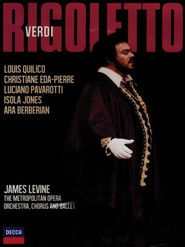
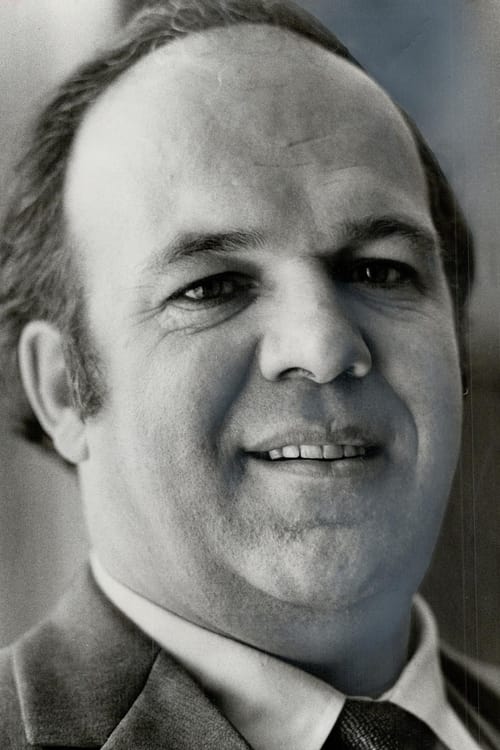
Louis Quilico, CC (January 14, 1925 – July 15, 2000) was a Canadian opera singer. One of the leading dramatic baritones of his day, he was an ideal interpreter of the great Italian and French composers, especially Giuseppe Verdi. He was often referred to as "Mr Rigoletto" in reference to the Verdi opera. During his 45-year-long career he shared performing credits with opera's greatest stars. He spent 25 consecutive years at the Metropolitan Opera in New York City. After his retirement from the stage in 1998 he continued to perform and record, most often with his second wife, pianist Christina Petrowska Quilico, CM OOnt FRSC, with whom he made four CDs. The couple also toured together extensively in concerts until Quilico's death in 2000. Quilico received the Governor General's Performing Arts Award, Canada's highest honour in the performing arts, in November 1999 for his lifetime contribution to classical music. Louis Quilico was born in Montreal, Quebec, of an Italian father and a French-Canadian mother. He studied singing as a youth with Frank H. Rowe in his native Montreal while singing as a solo chorister in a church choir. After winning a prize in 1947, at the urging of the pianist and vocal coach Lina Pizzolongo, he continued his studies in Italy, studying at the Accademia Nazionale di Santa Cecilia in Rome with Teresa Pediconi and baritone Riccardo Stracciari. With the aid of a scholarship he also studied at Mannes College, New York, with Martial Singher (voice), Ralph Herbert (staging) and Emil Cooper (repertoire), and at the Conservatoire de musique du Québec à Montréal where he worked with Singher. Quilico won the Nos futures étoiles competition on CBC Radio in 1953. He made his professional debut in 1954 as Rangoni in Boris Godunov with the Opera Guild of Montréal. He won the Metropolitan Opera Auditions of the Air in 1955 and made his New York debut with the New York City Opera, singing Germont in La traviata on October 10, 1955. Years later, in 1970, he sang the role of Nottingham in the Tito Capobianco production of Roberto Devereux opposite Beverly Sills, Plácido Domingo and Susanne Marsee. On the international scene, Quilico made his debut in 1959 at the Spoleto Festival in the title role of Donizetti's "Il duca d'Alba." He made his debut at Covent Garden in London in La traviata opposite Dame Joan Sutherland in 1960, and remained a member of that company until 1963. He sang Rigoletto in his debut at the Bolshoi Theatre in Moscow, in 1962. In 1963 Quilico made his Paris Opéra debut as Rodrigue in Don Carlos. He was a member of the cast for the premiere of the opera La Mère coupable by Milhaud, in Geneva in 1966. He also appeared regularly at the Vienna State Opera and the Teatro Colón in Buenos Aires. In Canada, Quilico performed regularly with the Canadian Opera Company in Toronto, debut as Iago in Otello in 1960; later roles were Rigoletto, Macbeth, Simon Boccanegra, Germont, Amonasro in Aïda, Scarpia in Tosca, Enrico in Lucia di Lammermoor, etc. He also made several appearances on CBC notably as Macbeth (opposite Marisa Galvany) in 1973. Quilico also sang at the Stratford Festival, the Vancouver Opera, and the Opéra du Québec. He sang his last Rigoletto at the Opéra de Montréal in 1991. ... Source: Article "Louis Quilico" from Wikipedia in English, licensed under CC-BY-SA 3.0.
Louis Quilico, né le 14 janvier 1925 et décédé le 15 juillet 2000, est un baryton canadien, qui s'est particulièrement illustré dans le répertoire italien et plus spécifiquement les opéras de Giuseppe Verdi. S'il a chanté des dizaines de rôles différents au cours de sa carrière, c'est dans celui du rôle-titre de Rigoletto qu'il a incarné plus de 500 fois sur scène entre 1962 et 1994, qu'il est resté célèbre à tel point qu'on lui donnait le surnom de «Monsieur Rigoletto». Louis Quilico est né à Montréal au Québec. Il étudie avec Martial Singher au conservatoire de Montréal et au Mannes College à New York, ainsi qu’avec Teresa Pediconi et Riccardo Stracciari au conservatoire Sainte-Cécile à Rome. Il a débuté sur scène à l'Opéra Guild de Montréal dans le petit rôle de Rangoni dans Boris Godounov en 1954 et remporte les Metropolitan Opera Auditions of the Air en 1955 mais c'est au New York City Opera qu'il fait ses débuts fin 1955 en incarnant Germont père dans la Traviata. Il reprend le rôle pour la même compagnie en 1957, aux côtés du soprano Beverly Sills. En 1958, il se produit aux côtés de son ancien maître, Martial Singher, dans une production de La Grande Duchesse de Gerolstein au prestigieux Town Hall de New York. En 1959, pour ses débuts en Europe, Louis Quilico incarne le rôle titre de Il Duca d’Alba au Festival dei due mondi à Spoleta, dans une mise en scène de Luchino Visconti sous la direction de Thomas Schippers. Il fait ses débuts au Royal Opera House de Londres le 2 février 1961 en incarnant le petit rôle de Demetrius dans A Midsummer Night's Dream sous la direction de Georg Solti pour six représentations. Il devient membre de la compagnie, y demeurant jusqu’en 1963. Il apparait dans une série de représentations pour des rôles de plus en plus importants, dont Sharpless dans Madame Butterfly en mars 1961 puis en octobre de la même année, Thoas dans Iphigénie en Tauride en septembre 1961 aux côtés de Rita Gorr6, Prince Yeletsky dans La Dame de Pique en décembre 1961. En mars 1962, il incarne Germont père aux côtés de Joan Sutherland dans La Traviata, mise en scène par Franco Zeffirelli. Il retourne à Covent Garden dix ans plus tard pour incarner successivement pour une représentation, Lord Henry Ashton (Enrico) dans Lucia Di Lammermoor en mai 1973, dans la prestigieuse distribution qui réunit Joan Sutherland et Luciano Pavarotti sous la direction de Richard Bonynge puis à nouveau Germont Père, toujours avec Joan Sutherland, et l'Alfredo d'Alfredo Kraus en janvier 1975. En 1962, Louis Quilico chante au Théâtre Bolchoï de Moscou ainsi qu’au Staatsoper de Vienne, et se fait entendre pour la première fois à l’Opéra de Paris en 1963. Il chante lors de la création de l’oratorio Pacem in terris de Darius Milhaud et fait également partie de la distribution pour la création à Genève de La Mère coupable. Entre 1964 et 1971, M. Quilico se produit fréquemment dans nombre des plus grandes maisons d’opéra et est à maintes reprises l’invité du Canadian Opera Company et de l’Opéra de Québec. ... Source: Article "Louis Quilico" de Wikipédia en français, soumis à la licence CC-BY-SA 3.0.