Rachid Taha
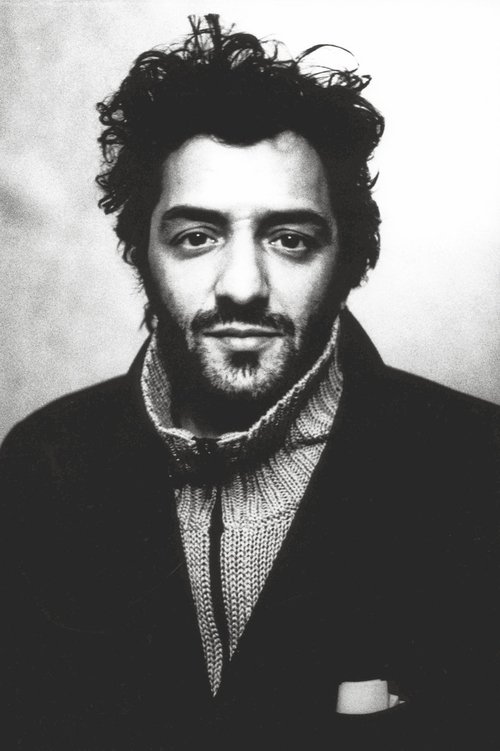
Rachid Taha (Arabic: رشيد طه, Rashīd Ṭāhā; 18 September 1958 – 12 September 2018) was an Algerian singer and activist based in France described as "sonically adventurous". His music was influenced by many different styles including rock, electronic, punk and raï. Taha was born on 18 September 1958 in Sig, Mascara Province, Algeria, although a second source suggests he was born in the Algerian seacoast city of Oran. This town was the "birthplace of raï" music, and 1958 was a key year in the Algerian struggle for independence against French authority. He began listening to Algerian music in the 1960s, including street-style music called chaabi. Additionally, music from the Maghreb region was part of his upbringing. He moved with his parents to France when he was ten years old, settling in an immigrant community around the French city of Lyon in 1968. His father was a textile factory worker, with long hours and low pay, such that his life was compared to that of a "modern slave", according to one account. Aged 17, Taha worked during the day at a central heating plant, described as a "menial job", and hated this work, but at night worked as a club DJ playing Arabic music, rap, salsa, funk and "anything else that took his fancy." In the late 1970s, Taha founded the nightclub called The Rejects or, in French, Les Refoulés, where he would spin mashups of Arabic pop classics over Led Zeppelin, Bo Diddley and Kraftwerk backbeats. In the 1980s, Algeria's indigenous pop music known as raï began to achieve international attention. Originally raï music was based on "city slickers adapting music from the sticks" and was described as ribald, but it became more of a medium for political protest when young people in the 1960s and 1970s used it to "express their anger and desires." Taha suggested that Algerian musical styles and rock are "closely linked". Taha was influenced by the Moroccan chaâbi band Nass El Ghiwane which has been described as "Morocco's answer to the Beatles or the Stones." In 1981, while living in Lyon, Taha met Mohammed and Mokhtar Amini and the three of them, along with Djamel Dif and Eric Vaquer, would soon form a band. In 1982, Taha was the lead vocalist for the Arab-language rock group which they named Carte de Sejour, meaning Green Card or Residence Permit depending on the translation. He sang in both French and Arabic, but usually in Arabic. Taha was inspired by the group The Clash: "The Clash were militant and hedonistic in equal measure ... And that was exciting to me. You could be a rebel and be in the biggest rock'n' roll band in the world! It was also clear that they loved music. Joe Strummer had nothing to do with that terrible punk cynicism. By the time of Mogador '81 they weren't just a rock'n'roll band, they were doing hip-hop, reggae, ska, country and western, disco, but making it sound their own. I think that's what gave French musicians the confidence to do the same with whatever music they were into. In some ways, they introduced us to the world." – Rachid Taha, in The Guardian, 2007. ... Source: Article "Rachid Taha" from Wikipedia in English, licensed under CC-BY-SA 3.0.
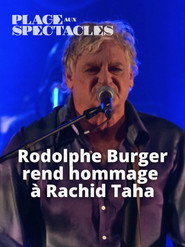
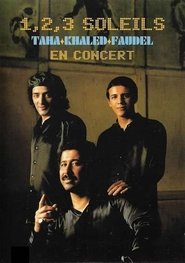
Rachid Taha (arabe : رشيد طه), né le 18 septembre 1958 à Saint-Denis-du-Sig (aujourd'hui Sig, en Algérie) et mort le 12 septembre 2018 aux Lilas (Seine-Saint-Denis), est un chanteur franco-algérien. Le père de Rachid Taha est originaire de Sidi Aïch (dans la région de Béjaïa) et sa mère est originaire de Mascara. Il déménage pour l'Alsace à Sainte-Marie-aux-Mines, avec ses parents en 1968, puis vit quelque temps à Lépanges-sur-Vologne dans les Vosges où il étudie au lycée Jeanne d'Arc de Bruyères. À cette époque, il apprend réellement à écrire l'arabe et parler l'arabe littéraire, notamment en écoutant les chansons d'Oum Kalthoum. Après des études de comptabilité et différents petits boulots, Rachid Taha s'installe à Rillieux-la-Pape, où il travaille à l'usine Therm'x. Il y rencontre Mohammed et Moktar Amini, et il forme avec eux en 1980 le groupe Carte De Séjour qui prendra sa forme définitive avec l'arrivée en 1982 de Jérôme Savy, participent notamment à la Marche pour l'égalité et contre le racisme de Marseille à Paris et sortant un premier album intitulé Rhorhomanie en 1984. En 1986, Rachid Taha et Carte de séjour reprennent Douce France, une chanson que Charles Trenet interprétait en 1943. L'album du groupe a été distribué aux députés de l'Assemblée nationale. Le groupe se dissout en 1989 et Rachid Taha entame une carrière solo avec la sortie de son premier album Barbès en 1991. En mai 1998, il sort Diwân qui compile des compositions chaâbi de Dahmane El Harrachi (Ya Rayah), de Hadj El Anka, de Akli Yahyaten, ainsi que Nass El Ghiwane et Farid El Atrache. Rachid Taha revendique fréquemment l'héritage de Cheikha Remitti, dont il a repris de nombreux rythmes et mélodies. Quelques mois plus tard, en novembre 1998, il sort l'album live Un, Deux, Trois Soleils avec de Khaled et Faudel. Il devient mondialement connu notamment avec le titre Ya Rayah. Il enregistre avec Alain Bashung le titre Ode À La Vie (Remix). Il reçoit sa première Victoire de la musique en 2001. En 2004, il sort l'album Tékitoi, qui reçoit un bon accueil dans la presse en France et aux États-Unis. Cet album reprend le tube Rock the Casbah du groupe punk britannique The Clash. En 2008, il collabore avec Rodolphe Burger pour le titre Arabécédaire et publie son autobiographie, Rock la Casbah. En 2013 sort son neuvième album solo, Zoom produit par Justin Adams. Avec cet album, Rachid Taha fait encore une fois le tour du monde en donnant des concerts. En 2015, Rachid Taha écrit en collaboration avec Kenzy Bourras des musiques de films français et fait aussi des apparitions dans ces films. Toujours en 2015, il reçoit un trophée des Victoires de la musique pour l'ensemble de sa carrière. En 2017, tout en donnant des concerts, il s'associe avec son ami Rodolphe Burger et crée le groupe CousCous Clan. En 2018, il se produit à l'Institut du monde arabe à Paris pour donner un concert unique en hommage à Dahmane El Harrachi. Rachid Taha a beaucoup collaboré avec le guitariste britannique Steve Hillage du groupe Gong, ce dernier a produit huit de ses albums en plus de jouer la guitare et de s'occuper du mixage sur plusieurs d'entre-eux. Rachid Taha meurt dans son sommeil dans la nuit du 11 au 12 septembre 2018, aux Lilas (Seine-Saint-Denis), des suites d’une crise cardiaque. Il est enterré à Sig en Algérie.
Acting (8)

Crew (10)