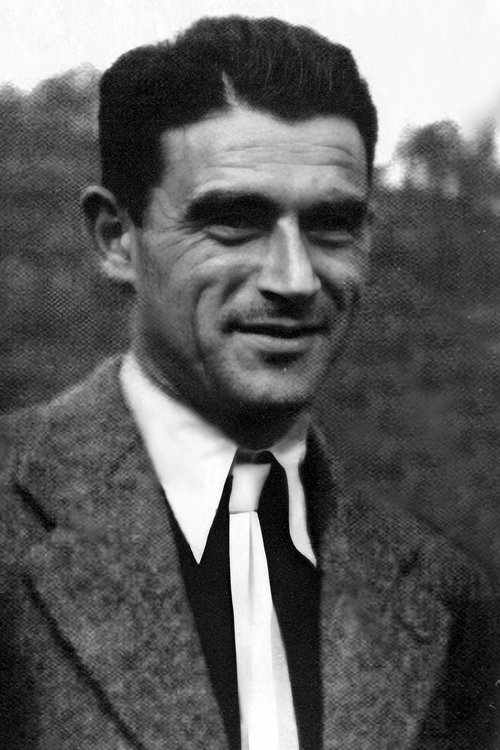
Raymond Latarjet
Raymond Latarjet, born in Lyon on October 17, 1911 and died in Neuilly-sur-Seine on June 3, 1998, was a French biologist and radiobiologist. He is the son of André Latarjet, professor of medicine in Lyon. Raymond Latarjet, first a physicist, then a doctor, was for twenty years the undisputed and prestigious leader of French radiobiology and gave it great international renown. He devoted his doctoral theses in science and medicine to ultraviolet rays and their attenuation by atmospheric ozone. By calculation, he establishes the relationship between the thickness of the ozone layer and the genotoxic activity (mutagenic and carcinogenic) of solar ultraviolet rays. This work was resumed in the 1970s. In 1945, Raymond Latarjet was among the very first young French scientists to obtain a scholarship for a one-year stay in the United States. A fruitful stay since he made two first-rate discoveries there and forged links with the greatest teams. He will study the viral mutations caused by ultraviolet rays and, with Salvador Luria, one of the founders of molecular biology, they demonstrate the variability of the infectious power of a bacteriophage during its multiplication cycle. They introduce a new method in the cycle of viruses, by establishing the so-called “Luria-Latarjet” curves, which allow the study of the intracellular cycle of a virus. With Milislav Demerec, an American geneticist of Croatian descent, he describes the appearance of delayed radiomutations in Escherichia coli, a pioneering work which, half a century later, will continue to fascinate radiobiologists and pose an enigma to them, that of the origin of this genetic instability. From 1946 his career will take place with Antoine Lacassagne, director of the biology section of the Institut Curie, of which he was the right arm, then the successor in 1954. With the discovery of the role of DNA in cellular life, radiobiology is then in the process of mutating. However, some researchers are abandoning this discipline for molecular biology. Raymond Latarjet understands that with the development of nuclear energy and the rise of radiotherapy, radiobiology is becoming a key discipline. He teaches it brilliantly at the National Institute of Nuclear Sciences and Techniques in Saclay and at the Institut Curie. At the same time, he created a research team in cellular biology and became director of the Inserm unit of physiopathology and cellular radiobiology in 1962. In 1970, he determined the action spectrum of ultraviolet radiation for the inactivation of the scrapie agent in sheep (from the group of transmissible spongy encephalopathies). This absorption spectrum was not that of a nucleic acid but of a protein. The hypothesis was deduced that genetic continuity could be ensured by proteins, whose identification as an infectious agent, the prion, dates from the 1980s. Raymond Latarjet was a brilliant, rigorous, independent mind, not accepting dogmas and received ideas. Also adventurous, he took part, alongside Paul-Emile Victor, in 1948, in an expedition responsible for the construction of the first French glaciological study station in Greenland.
Raymond Latarjet, né à Lyon le 17 octobre 1911 et mort à Neuilly-sur-Seine le 3 juin 1998, est un biologiste et un radiobiologiste français. Il est le fils d'André Latarjet, professeur de médecine à Lyon. Raymond Latarjet, d’abord physicien, puis médecin, a été pendant vingt ans le chef de file incontesté et prestigieux de la radiobiologie française et lui a donné un grand éclat international. Il consacre ses thèses de doctorat ès sciences, et de médecine, aux ultraviolets et à leur atténuation par l’ozone atmosphérique. Par le calcul, il établit les relations entre l’épaisseur de la couche d’ozone et l’activité génotoxique (mutagène et cancérigène) des ultraviolets solaires. Ce travail fut repris dans les années 1970. En 1945, Raymond Latarjet est parmi les tous premiers jeunes scientifiques français à obtenir une bourse pour un séjour d’un an aux États-Unis. Séjour fécond puisqu’il y fait deux découvertes de premier plan et noue des liens avec les plus grandes équipes. Il va étudier les mutations virales provoquées par les ultraviolets et, avec Salvador Luria, l’un des fondateurs de la biologie moléculaire, ils démontrent la variabilité du pouvoir infectieux d’un bactériophage au cours de son cycle de multiplication. Ils introduisent une nouvelle méthode dans le cycle des virus, en établissant les courbes dites “Luria-Latarjet”, qui permettent l’étude du cycle intracellulaire d’un virus. Avec Milislav Demerec, généticien américain d’ascendance croate, il décrit l’apparition des radiomutations différées chez Escherichia coli,travail pionnier qui, un demi-siècle plus tard, continuera à passionner les radiobiologistes et à leur poser une énigme, celle de l’origine de cette instabilité génétique. A partir de 1946 sa carrière va se dérouler auprès d’Antoine Lacassagne, directeur de la section de biologie de l’Institut Curie, dont il a été le bras droit, puis le successeur en 1954. Avec la découverte du rôle de l’ADN dans la vie cellulaire, la radiobiologie est alors en train de muter. Certains chercheurs abandonnent cependant cette discipline pour la biologie moléculaire. Raymond Latarjet comprend qu’avec le développement de l’énergie nucléaire et l’essor de la radiothérapie, la radiobiologie devient une discipline-clé. Il l’enseigne avec brio à l’Institut national des sciences et techniques nucléaires à Saclay et à l’Institut Curie. En même temps, il crée une équipe de recherche en biologie cellulaire et devient directeur de l’unité Inserm de physiopathologie et radiobiologie cellulaire en 1962. En 1970, il déterminera le spectre d’action de radiations ultraviolettes pour l’inactivation de l’agent de la tremblante du mouton (du groupe des encéphalopathies spongieuses transmissibles). Ce spectre d’absorption n’était pas celui d’un acide nucléique mais d’une protéine. En fut déduite l’hypothèse qu’une continuité génétique pouvait être assurée par des protéines, dont l’identification en tant qu’agent infectieux, le prion, date des années 1980. Raymond Latarjet a été un esprit brillant, rigoureux, indépendant, n’admettant pas les dogmes et les idées reçues. Aventureux également il participera, aux côtés de Paul-Emile Victor, en 1948, à une expédition chargée de la construction au Groenland, de la première station française d’étude glaciologique.