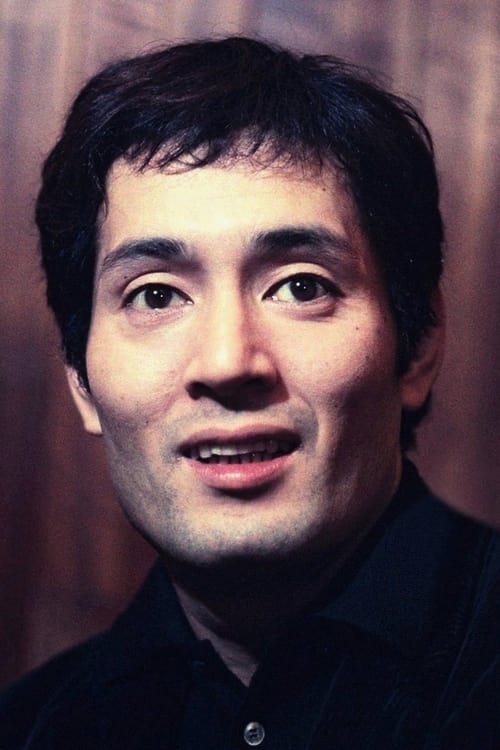
Tatsuya Nakadai
Tatsuya Nakadai (仲代 達矢, Nakadai Tatsuya; born Motohisa Nakadai; December 13, 1932 – November 8, 2025) was a Japanese actor. Widely regarded as one of the greatest actors in the history of Japanese cinema, he collaborated extensively with many of Japan's best-known and acclaimed directors. In his over seven decade career, he appeared in more than 160 films, and received numerous accolades. He was honored with a Medal with Purple Ribbon in 1996 and Japan's Order of Culture in 2015. Nakadai rose to prominence starring in Masaki Kobayashi's films, with his breakthrough being the protagonist of the epic anti-war trilogy The Human Condition (1959–1961). He won the Blue Ribbon Award for Best Actor for his performance as the vengeful ronin in Harakiri (1962), a role he considered his finest. Nakadai collaborated on eleven films with Kobayashi—including Kwaidan (1964) and Samurai Rebellion (1967)—and five with Akira Kurosawa, most notably as the tragic warlord in Ran (1985), a performance that earned global acclaim. His other notable credits included Seven Samurai (1954), Yojimbo (1961), The Sword of Doom (1966), The Face of Another (1966), Goyokin (1969), Kagemusha (1980), and The Tale of the Princess Kaguya (2013). A lifelong stage actor, he founded the Gendai Nohgaku-kai troupe in 1975 and continued performing on stage into his nineties. Description above from the Wikipedia article Tatsuya Nakadai, licensed under CC-BY-SA, full list of contributors on Wikipedia.
Tatsuya Nakadai (geb. Motohisa Nakadai) war ein japanischer Schauspieler. Er gilt weithin als einer der größten Schauspieler der Filmgeschichte und arbeitete intensiv mit vielen der bekanntesten und gefeiertsten Regisseure Japans zusammen. In seiner über sieben Jahrzehnte währenden Karriere wirkte er in mehr als 160 Filmen mit und erhielt zahlreiche Auszeichnungen. 1996 wurde ihm die Medaille mit Purpurband und 1997 der Japanische Kulturorden verliehen.
Tatsuya Nakadai (仲代達矢 Nakadai Tatsuya, n. Tokio, 13 de diciembre de 1932) es un actor japonés de cine, teatro y televisión. Desde su descubrimiento en 1953, Nakadai ha aparecido en más de 120 películas. Es conocido por ser un actor habitual en la filmografía de Masaki Kobayashi, así como por sus papeles en varias películas de Akira Kurosawa de los años 1950 y 1960. Es uno de los actores japoneses vivos más reconocidos. En 1968 llegaría su única experiencia en el cine europeo, el spaghetti western italiano Ojo por ojo, dirigido por Tonino Cervi.
Tatsuya Nakadai (仲代 達矢, Nakadai Tatsuya ; né Motohisa Nakadai ; 13 décembre 1932 – 8 novembre 2025) était un acteur japonais. Largement considéré comme l’un des plus grands acteurs de l’histoire du cinéma japonais, il a collaboré à de nombreuses reprises avec plusieurs des réalisateurs les plus connus et les plus acclamés du Japon. Au cours de sa carrière de plus de sept décennies, il a joué dans plus de 160 films et a reçu de nombreuses distinctions. Il a été décoré de la Médaille du Ruban pourpre en 1996 et de l’Ordre de la Culture du Japon en 2015. Nakadai s’est fait connaître en jouant dans les films de Masaki Kobayashi, sa percée ayant eu lieu lorsqu’il a incarné le protagoniste de la trilogie épique anti-guerre *La Condition humaine* (1959–1961). Il a remporté le Prix du Ruban bleu du meilleur acteur pour son interprétation du rōnin assoiffé de vengeance dans *Harakiri* (1962), un rôle qu’il considérait comme son plus grand. Nakadai a collaboré avec Kobayashi sur onze films — dont *Kwaidan* (1964) et *La Rébellion des samouraïs* (1967) — et avec Akira Kurosawa sur cinq, notamment dans le rôle du seigneur de guerre tragique de *Ran* (1985), une interprétation qui lui a valu une reconnaissance mondiale. Parmi ses autres rôles marquants, citons *Les Sept Samouraïs* (1954), *Yojimbo* (1961), *L’Épée du destin* (1966), *Le Visage d’un autre* (1966), *Goyokin* (1969), *Kagemusha* (1980) et *Le Conte de la princesse Kaguya* (2013). Acteur de théâtre de longue date, il a fondé la troupe Gendai Nohgaku-kai en 1975 et a continué à se produire sur scène jusqu’à ses nonante ans.
1952年、俳優座演劇研究所付属俳優養成所に4期生として入所。千田是也に師事し、シェイクスピア劇から日本の怪談ものまで多数の舞台に出演。映画界では、小林正樹監督に見いだされ、「人間の條件」6部作(59~61)や「切腹」(62)などで主演を務め、黒澤明監督の「影武者」(80)、「乱」(85)にも主演。成瀬巳喜男、岡本喜八、市川崑、五社英雄など日本を代表する監督の作品に多数出演し、日本映画界に欠かせない存在となる。75年に私塾「無名塾」を設立し、後進の俳優育成にも注力している。NHK大河ドラマ「新・平家物語」(72)や、「大地の子」(95)ほか多くのTVドラマにも出演した。芸術選奨文部大臣賞など数々の演劇賞を受賞。92年、仏シュバリエ芸術勲章、96年に紫綬褒章、03年に勲四等旭日小綬章、15年に文化勲章を受章した。
Tatsuya Nakadai (Tóquio, 13 de dezembro de 1932) é um ator japonês. Desde que foi descoberto em 1953, Nakadai já atuou em mais de 120 filmes. É conhecido pelos seus papéis nos filmes de Akira Kurosawa nos anos 50 e 60, é seguramente o ator japonês vivo mais renomado daquele país. Ele se tornou o protagonista favorito do diretor aclamado internacionalmente Akira Kurosawa após uma discussão bem divulgada entre Kurosawa e o lendário Toshirō Mifune. A partir do final da década de 1950, ele trabalhou com vários dos cineastas mais conhecidos do Japão, estrelando ou co-estrelando cinco filmes de Kurosawa.
Được xem là một trong những diễn viên vĩ đại nhất của điện ảnh Nhật Bản, Nakadai Tatsuya được biết đến qua khả năng biến hoá diễn xuất đa dạng, phức tạp, có thể đóng nhiều thể loại phim khác nhau như chiến tranh, samurai, tâm lý, gia đình… Trong thời kỳ đỉnh cao sự nghiệp của mình, Nakadai Tatsuya đã hợp tác với nhiều đạo diễn tên tuổi của Nhật Bản như Kurosawa Akira, Kobayashi Masaaki…
Acting (183)


























… and 123 more