Rondò Veneziano
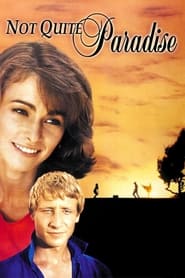
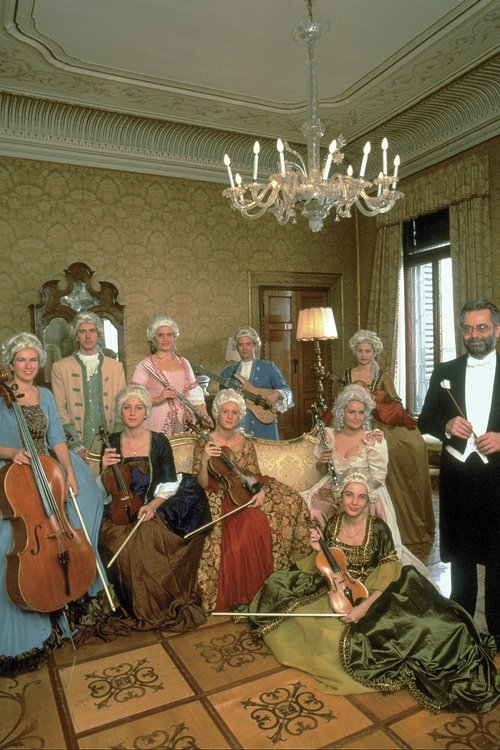
Rondò Veneziano is an Italian chamber orchestra, specializing in Baroque music, playing original instruments, but incorporating a rock-style rhythm section of synthesizer, bass guitar and drums, led by Maestro Gian Piero Reverberi, who is also the principal composer of all of the original Rondò Veneziano pieces. The unusual addition of modern instruments, more suitable for jazz, combined with Reverberi's arrangements and original compositions, have resulted in lavish novel versions of classical works over the years. As a rule in their concert tours, the musicians, mostly women, add to the overall Baroque effect wearing Baroque-era attire and coiffures. The orchestra's first decade of albums included only entirely original compositions in the style of the baroque rondò, "a musical composition built on the alternation of a principal recurring theme and contrasting episodes". In later years, in addition to many new and original albums continuing Gian Piero Reverberi's own unique Rondò style and tradition, Rondò Veneziano also brought their fusion of classical and contemporary instruments to a small number of albums dedicated to some of the great composers of the classical and baroque tradition. In an interview, Maestro Reverberi said on the sound of Rondò Veneziano: "Rondò Veneziano's music is first of all positive. Also when it seems to be sad, it's never sad. It's always positive in a sense that at the end there's always a good future. So I think that also the reason of the success it that it's music where you don't have to think negative or to feel negative or if you feel negative it should be something that brings you to think positive." In Italy, their debut album Rondò veneziano (1980) reached number 1 on the Germano Ruscitto chart and number 3 on the musica e dischi chart. It reached number 32 in Germany, where it sold more than 50,000 copies. The album La Serenissima (1981) reached number 10 on the Germano Ruscitto chart and number 8 on the musica e dischi chart. The album Scaramucce (1982) reached number 15 on the Germano Ruscitto chart, and number 14 on the musica e dischi chart, in Italy. It reached number 33 in Germany. The album Venezia 2000 (1983) reached number 3 on the Musica e dischi chart in Italy and number 2 in Germany. A version of "La Serenissima" (the theme from the album Venice in Peril) was released in the United Kingdom as a single and reached number 58 on the UK Singles Chart in October 1983. The track was also widely used at that time by BBC Television, as the theme tune to Hospital Watch. The track was later to feature on the globally successful Venice in Peril album which was released as part of an international campaign to save Venice from sinking into the lagoon. A reissue of the album Venice in Peril reached number 34 in the UK. An animated music video was produced for "La Serenissima". In 1985, they provided the score for the movie Not Quite Jerusalem (known as Not Quite Paradise in the United States). This score was a reworking of many of the original pieces featured on the Venice in Peril and The Genius of Venice albums. The orchestra has produced 70 albums since its founding in 1979. Source: Article "Rondò Veneziano" from Wikipedia in English, licensed under CC-BY-SA.
Rondò Veneziano est un ensemble musical italien, qui s'inspire de la musique baroque et classique, pour produire une variété pop rock. Le groupe fut créé en 1979 par Gian Piero Reverberi, compositeur et chef d'orchestre appartenant à l'école génoise. Plus de 25 millions d'albums ont été vendus dans le monde. Le répertoire du groupe, large et inspiré de modèles stylistiques très variés, est signé de Reverberi, connu par ailleurs pour avoir arrangé des morceaux pour Fabrizio De André, Luigi Tenco, Lucio Battisti, Gino Paoli, Mina, Lucio Dalla et, plus récemment, Eros Ramazzotti. Très inspirées du baroque vénitien dans les premières années d'existence de la formation, les sonorités ont régulièrement évolué, tant vers le classique que vers un certain impressionnisme musical, au point qu'il est très malaisé de ranger le groupe sous une étiquette précise. Après avoir enregistré près de 25 albums entre 1980 et 2002, l’activité de l’ensemble porte actuellement sur la scène, essentiellement en Europe. Rondò Veneziano naît au printemps 1979, sur une idée conjointe de Freddy Naggiar (Baby Records) et du compositeur Gian Piero Reverberi. Ce dernier quitte ainsi la maison de disques RCA Italiana pour Baby Records, où il va collaborer avec Al Bano, Romina Power, Pupo et Ricchi e Poveri. Le projet initial visait à créer une formation instrumentale italienne, dans la lignée de ce qu’avaient pu proposer Angelo Branduardi ou Stephen Schlaks. Reverberi opta pour une solution aux frontières du baroque et de la pop. La restauration du carnaval vénitien, à la fin des années 1970, contribua à faire du caractère à la fois festif et mondialement connu de Venise un thème essentiel d’inspiration. Pour matérialiser l’atmosphère baroque, les musiciens solistes se présentent en habits à la mode du XVIIIe siècle, avec perruques. Ces éléments avaient pour but de renforcer l’impact auprès du public et de rendre le groupe immédiatement reconnaissable. Les quatre premiers morceaux (dont Rondò Veneziano, San Marco et Andante Veneziano) furent enregistrés sous la direction de Reverberi au Varirecording Studios (Milan), avec un orchestre symphonique de Gênes, ainsi qu’un batteur et un bassiste de ses connaissances. Ces premiers morceaux plurent à la Baby Records, et cinq autres compositions vinrent s’y ajouter pour constituer un premier album: Rondò Veneziano. Si l'album était prêt dès l’hiver 1979, il ne fut publié que l’année suivante, pour préparer une stratégie commerciale plus efficace. Le 22 février 1980, le morceau Rondò Veneziano fut choisi par Silvio Berlusconi, sur le conseil de Freddy Naggiar, pour ouvrir et clore les programmes de la récente Canale 5, attisant ainsi la curiosité des téléspectateurs pendant près d’un an, puisque le morceau était diffusé six fois par jour, et que ni son nom, ni sa provenance n’étaient mentionnés. En 2008, G. P. Reverberi commentait les trente années de succès du groupe: «Aucun de nous n’imaginait un tel succès. Après la première apparition et le premier album, on pensait que le succès était dû à la nouveauté. Et pourtant, plusieurs années après, nous pouvons affirmer que nous avons créé un style de musique particulier.» ... Source: Article "Rondò Veneziano" de Wikipédia en français, soumis à la licence CC-BY-SA.