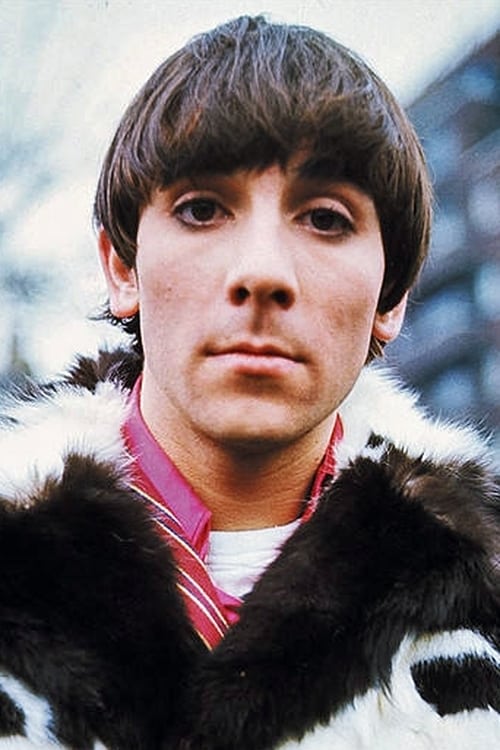
Keith Moon
Keith John Moon (August 23, 1946 – 7 September 1978) was an English musician, best known for being the drummer of English rock group The Who. He gained acclaim for his exuberant and innovative drumming style, and notoriety for his eccentric and often self-destructive behaviour, earning him the nickname "Moon the Loon". Moon joined The Who in 1964. He played on all albums and singles from their debut, 1964's "Zoot Suit", to 1978's Who Are You, which was released three weeks before his death. Moon was known for dramatic, suspenseful drumming—often eschewing basic back beats for a fluid, busy technique focused on fast, cascading rolls across the toms, ambidextrous double bass drum work and wild cymbal crashes and washes. He is mentioned in the Rock and Roll Hall of Fame as one of the greatest of all rock and roll drummers, and was posthumously inducted into the Rock Hall as a member of The Who in 1990. Moon's legacy, as a member of The Who, as a solo artist, and as an eccentric personality, continues to garner awards and praise, including a Rolling Stone readers' pick placing him in second place of the magazine's "best drummers of all time" in 2011, nearly 35 years after his death.
Keith John Moon (* 23. August 1946 in London; † 7. September 1978 in Mayfair, London) war ein britischer Musiker, der bis zu seinem Tod Schlagzeuger der Rockgruppe The Who war. Er zählte mit seinem äußerst dynamischen, schnellen Spiel und seinem exaltierten Auftreten zu den auffälligsten Schlagzeugern seiner Zeit. Keith Moon begann als Fünfzehnjähriger, Schlagzeug zu spielen, angeregt von Fernsehauftritten extrovertierter Big-Band-Drummer und vom Kinofilm Drum Crazy mit dem populären US-amerikanischen Jazz-Drummer Gene Krupa. In Carlo Little, der als Schlagzeuger mit Londoner Szenegrößen wie Screaming Lord Sutch und Alexis Korner zusammen spielte und in Moons Nachbarschaft wohnte, fand er seinen ersten und einzigen Lehrer. Moon wirkte zunächst in einigen Schülergruppen mit, bevor er 1963 der semiprofessionellen Coverband The Beachcombers beitrat. Zur Rockgruppe The Who stieß Keith Moon im Frühjahr 1964, nachdem der wesentlich ältere Schlagzeuger Doug Sandom die Gruppe auf Druck des Gitarristen Pete Townshend verlassen musste. Zu Beginn der Karriere der Who entwickelte Keith Moon zusammen mit Townshend „rituelle Zerstörungsorgien“ zum Abschluss ihrer Auftritte zur Steigerung der Publicity. Obwohl er weder als Komponist noch als Sänger bei The Who nennenswert in Erscheinung trat, war Moon aufgrund seines exaltierten und showmäßigen Stils ein wichtiger Bestandteil der Gruppe. Im Gegensatz zu den herkömmlichen Schlagzeugern der Beat-Ära bildete Moon nicht nur ein rhythmisches Fundament, sondern führte das Schlagzeug als Solo-Instrument in die Rockszene ein. Ähnlich wie der Schlagzeuger der Beatles Ringo Starr galt Moon als Witzbold der Gruppe, wenn er auch wesentlich wildere Auftritte und einen exzessiveren Lebenswandel zeigte: Wie der Schlagzeuger der R&B-Gruppe The Pretty Things, Viv Prince, fiel er durch starken Drogen- und Alkoholkonsum auf und zerstörte nach fast jedem wichtigen Auftritt sein Schlagzeug sowie diverse Hotel- und Wohnungseinrichtungen – und zwar lange bevor dies zum Verhaltensstandard aufstrebender Rockstars wurde. So bekam er seinen Spitznamen Moon the Loon (loon kurz für lunatic: „Moon, der Irre“). Keith Moon starb 1978 an einer Überdosis des ihm verordneten Beruhigungsmittels Clomethiazol („Distraneurin“), das er einnahm, um von seiner Alkoholsucht loszukommen.
Batería de la banda The Who, leyenda del rock y experto en explosivos.
Keith Moon, de son nom complet Keith John Moon, né le 23 août 1946 à Wembley, en ancien comté du Middlesex, dans l'ouest de Londres, en Angleterre, au Royaume-Uni, et mort le 7 septembre 1978 à Mayfair, dans l'ouest de Londres, en Angleterre, au Royaume-Uni, est un batteur britannique. Il est, de 1964 à sa mort, le batteur du groupe de rock The Who. Sa façon exubérante et innovante de jouer de la batterie ainsi que son comportement excentrique et autodestructeur lui valent sa renommée et le surnom de «Moon the Loon» («Moon le Dingue»). Keith Moon rejoint les Who en 1964. Il joue sur tous leurs albums et singles, à commencer par le premier I Can't Explain jusqu'à Who Are You, publié en 1978 trois semaines avant son décès par surdose de médicaments, à 32 ans. Le jeu de Keith Moon, à la fois technique et anarchique, foisonnant, tout en roulement de toms, en percussion de cymbales, en jeu des deux pieds avec sa double grosse caisse, en a fait un batteur considéré comme l'un des plus grands de l'histoire du rock. Il se classe à la 2e place du classement des 100 meilleurs batteurs de tous les temps du magazine Rolling Stone derrière John Bonham. Après sa mort, il est remplacé au sein des Who par le batteur des Small Faces, Kenney Jones, et plus récemment par Zak Starkey, dont il était le parrain. Fils d'Alfred et de Kathleen Moon, Keith naît à Wembley, à l'ouest de Londres, le 23 août 1946, bien qu'il ait parfois prétendu être né un an plus tard. Vivant à Alperton dans sa jeunesse, c'est un enfant hyperactif et doté d'une grande imagination. Toutefois, ses bulletins scolaires ne sont guère encourageants, un de ses professeurs d'art allant jusqu'à le qualifier d'«attardé artistiquement» et d'«idiot à bien des égards». La seule chose capable d'intéresser Moon reste la musique. Très tôt, ses professeurs apprécient sa technique basée sur un jeu chaotique, reconnaissant sa «grande capacité». Moon rate un examen et quitte l'école en 1961. Il épouse Kim Kerrigan, alors enceinte, le 27 mars 1966. Sa fille Amanda naît quatre mois plus tard, le 12 juillet. Kim quitte Keith en 1973 et emmène Amanda avec elle. Leur divorce est officialisé en 1975. ... Source: Article "Keith Moon" de Wikipédia en français, soumis à la licence CC-BY-SA 3.0.
Acting (29)