Ingrid Bergman
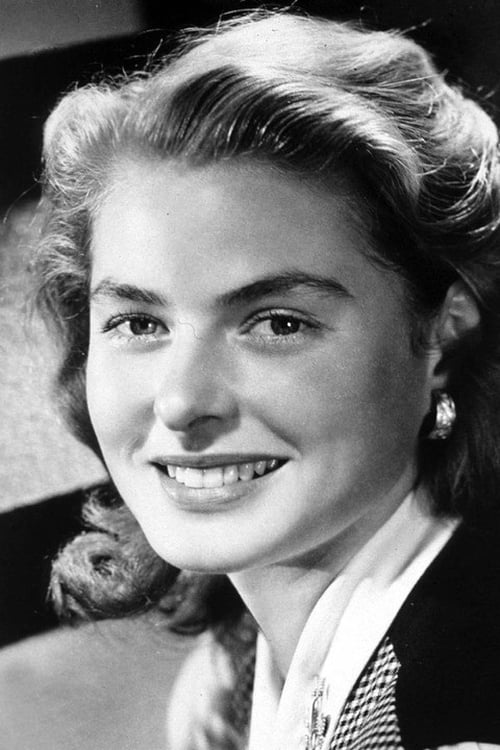
Ingrid Bergman (August 29, 1915 – August 29, 1982) was a Swedish actress who starred in a variety of European and American films, television movies, and plays. With a career spanning five decades, she is often regarded as one of the most influential screen figures in cinematic history. According to the St. James Encyclopedia of Popular Culture, upon her arrival in the U.S. Bergman quickly became "the ideal of American womanhood" and a contender for Hollywood's greatest leading actress. David O. Selznick once called her "the most completely conscientious actress" he had ever worked with. In 1999, the American Film Institute recognised Bergman as the fourth greatest female screen legend of Classic Hollywood Cinema. She won numerous accolades, including three Academy Awards, two Primetime Emmy Awards, a Tony Award, four Golden Globe Awards, BAFTA Award and a Volpi Cup. She is one of only four actresses to have received at least three acting Academy Awards (only Katharine Hepburn has four). Born in Stockholm to a Swedish father and a German mother, Bergman began her acting career in Swedish and German films. Her introduction to the U.S. audience came in the English-language remake of Intermezzo (1939). Known for her naturally luminous beauty, she starred in Casablanca (1942) as Ilsa Lund, her most famous role, opposite Humphrey Bogart. Bergman's notable performances in the 1940s include the dramas For Whom the Bell Tolls (1943), Gaslight (1944), The Bells of St. Mary's (1945), and Joan of Arc (1948), all of which earned her nominations for the Academy Award for Best Actress; she won for Gaslight. She made three films with Alfred Hitchcock: Spellbound (1945), with Gregory Peck, Notorious (1946), opposite Cary Grant and Under Capricorn (1949), alongside Joseph Cotten. In 1950, she starred in Roberto Rossellini's Stromboli, released after the revelation she was having an affair with Rossellini; that and her pregnancy prior to their marriage created a scandal in the U.S. that prompted her to remain in Europe for several years. During this time she starred in Rossellini's Europa '51 and Journey to Italy (1954), now critically acclaimed, the former of which won her the Volpi Cup for Best Actress. She had a successful return to working for a Hollywood studio in Anastasia (1956), winning her second Academy Award for Best Actress. Soon after, she co-starred with Grant in the romance Indiscreet (1958). In 1969, she starred in the acclaimed and highly successful film Cactus Flower. In later years, Bergman won her third Academy Award, this one for Best Supporting Actress, for her role in Murder on the Orient Express (1974). In 1978, she starred in Ingmar Bergman's (no relation) Swedish Autumn Sonata receiving her sixth Best Actress nomination. Bergman spoke five languages – Swedish, English, German, Italian and French – and acted in each. In her final role, she portrayed the late Israeli Prime Minister Golda Meir in the television miniseries A Woman Called Golda (1982) for which she posthumously won her second Emmy Award for Best Actress. In 1974, Bergman discovered she was suffering from breast cancer but continued to work until shortly before her death on her sixty-seventh birthday.
Ingrid Bergman (Estocolm, Suècia, 29 d'agost del 1915 – Londres, Anglaterra, 29 d'agost del 1982) fou una actriu sueca que va protagonitzar diverses pel·lícules europees i americanes, pel·lícules de televisió i obres de teatre. Amb una carrera que abasta cinc dècades, sovint és considerada com una de les figures de pantalla més influents de la història del cinema. Al llarg de la seva carrera, va obtenir nombrosos reconeixements inclosos tres Oscars. Fou la mare de la model i actriu Isabella Rossellini. Morí de càncer de pit el dia que complia 67 anys.
Ingrid Bergman war eine schwedische Schauspielerin, deren Karriere sich über fünf Jahrzehnte erstreckte. Bergman gilt oft als eine der einflussreichsten Schauspielerinnen der Filmgeschichte. Sie gewann zahlreiche Auszeichnungen, darunter drei Oscars, zwei Primetime-Emmy-Awards und einen Tony Award; damit war sie die jüngste Darstellerin, die die „Triple Crown of Acting“ errang, und eine von vier Schauspielerinnen, die mindestens drei Oscars für ihre schauspielerischen Leistungen erhielten. Bergman wurde in Stockholm als Tochter eines schwedischen Vaters und einer deutschen Mutter geboren und begann ihre Schauspielkarriere in schwedischen und deutschen Filmen. Dem US-amerikanischen Publikum wurde sie durch das englischsprachige Remake von „Intermezzo“ (1939) bekannt. Bekannt für ihre natürliche, strahlende Schönheit, spielte sie in „Casablanca“ (1942) die Rolle der Ilsa Lund. Zu Bergmans bemerkenswerten Darbietungen in den 1940er Jahren zählen die Dramen „Wem die Stunde schlägt“ (1943), „Gaslight“ (1944), „Die Glocken von St. Mary’s“ (1945) und „Jeanne d’Arc“ (1948), die ihr allesamt Nominierungen für den Oscar als beste Hauptdarstellerin einbrachten; den Oscar gewann sie für „Gaslight“. Sie drehte drei Filme mit Alfred Hitchcock: „Spellbound“ (1945), „Notorious“ (1946) und „Under Capricorn“ (1949). 1950 spielte sie die Hauptrolle in Roberto Rossellinis „Stromboli“, der in die Kinos kam, nachdem bekannt geworden war, dass sie eine Affäre mit Rossellini hatte; dies und ihre Schwangerschaft vor der Heirat lösten in den USA einen Skandal aus, der sie dazu veranlasste, mehrere Jahre in Europa zu bleiben. Sie kehrte nach Hollywood zurück und gewann zwei weitere Oscars für ihre Rollen in „Anastasia“ (1956) und „Mord im Orient-Express“ (1974). In dieser Zeit spielte sie außerdem in „Indiskret“ (1958), „Die Kaktusblüte“ (1969) und „Herbstsonate“ (1978) mit und erhielt ihre sechste Nominierung als beste Hauptdarstellerin. Bergman gewann den Tony Award als beste Schauspielerin in einem Theaterstück für das Stück „Joan of Lorraine“ (1947) von Maxwell Anderson. Außerdem gewann sie zwei Primetime-Emmy-Awards als herausragende Hauptdarstellerin in einer Miniserie oder einem Fernsehfilm für „The Turn of the Screw“ (1960) und „Golda Meir“ (1982). 1974 erfuhr Bergman, dass sie an Brustkrebs erkrankt war, und arbeitete bis kurz vor ihrem Tod an ihrem 67. Geburtstag im Jahr 1982 weiter. Bergman sprach fünf Sprachen – Schwedisch, Englisch, Deutsch, Italienisch und Französisch – und spielte in jeder davon.
Ingrid Bergman fue una actriz sueca galardonada con 3 premios Óscar —igualada por Meryl Streep en 2012 y sólo superada por Katharine Hepburn con cuatro estatuillas— y 5 Globo de Oro, además fue la primera ganadora del Premio Tony como mejor actriz. Considerada uno de los mitos del séptimo arte, según la lista realizada por el American Film Institute es la cuarta estrella más importante en la historia del cine. Es probablemente una de las actrices más prolíficas del siglo XX, debido en parte a que desarrolló su carrera en cinco idiomas (sueco, alemán, inglés, italiano y francés) y actuó en cine, teatro y televisión en Suecia, Alemania, Estados Unidos, Canadá, Inglaterra, Italia, Francia, España e Israel. Falleció el día de su 67.º cumpleaños, tras librar una larga batalla contra el cáncer de mama.
Ingrid Bergman, née le 29 août 1915 à Stockholm (Suède) et morte le 29 août 1982 à Londres (Royaume-Uni) est une actrice suédoise. Elle avait déjà tourné quelques films en Suède lorsque le producteur David O. Selznick lui propose en 1939 de reprendre le rôle principal du remake américain d'Intermezzo, ce qui la fait connaître dans son pays. Sa carrière internationale est lancée et sa popularité s'accroît de films en films : Casablanca, Pour qui sonne le glas, Hantise (1944), qui lui vaut l’Oscar de la meilleure actrice, puis Jeanne d'Arc en font la star mondiale la plus désirée et la mieux rémunérée. Elle connaît son apogée avec trois films d'Alfred Hitchcock : La Maison du docteur Edwardes, Les Enchaînés et Les Amants du Capricorne. Ingrid Bergman est considérée comme l’une des plus grandes actrices de l’histoire du cinéma. En 1999, le classement « AFI’s 100 Years… 100 Stars » de l’American Film Institute l'a classée quatrième au panthéon des plus grandes actrices du cinéma américain. Contenu soumis à la licence CC-BY-SA 3.0. Source : Article Ingrid Bergman de Wikipédia en français.
スウェーデン出身。2歳で母を、12歳で父を亡くし、叔父のもとに身を寄せる。1932年、スウェーデン映画へのエキストラ出演をきっかけに女優を夢見るようになり、「ムンクブローの伯爵」(35)でデビュー。主演作「間奏曲」(36)がプロデューサーのデビッド・O・セルズニックの目に留まり、同作のハリウッドリメイク版「別離」(39)にも主演して一躍スター女優となった。名作「カサブランカ」(42)を経て、「誰が為に鐘は鳴る」(43)でアカデミー女優賞に初ノミネートされ、続く「ガス燈」(44)で受賞。「聖メリーの鐘」(45)でゴールデングローブ賞主演女優賞を受賞した。イタリアで撮影した「ストロンボリ」(49)のロベルト・ロッセリーニ監督と恋に落ち、当時の夫と娘を捨ててイタリアに残るが、「追想」(56)でハリウッドに戻り、2度目のオスカーとゴールデングローブ賞主演女優賞を受賞。「オリエント急行殺人事件」(74)ではアカデミー助演女優賞を受賞した。イングマール・ベルイマン監督の「秋のソナタ」(78)が最後の映画出演作となり、82年、エミー賞主演女優賞を受賞したTV映画「ゴルダと呼ばれた女」出演後、67歳の誕生日に乳癌のため死去した。
Ingrid Bergman (Estocolmo, 29 de agosto de 1915 — Londres, 29 de agosto de 1982) foi uma atriz sueca, que estrelou em uma variedade de filmes europeus e norte-americanos, telefilmes e peças de teatro. Já famosa no seu país, Ingrid foi levada para Hollywood em 1939 para estrelar a versão de um dos seus mais bem sucedidos filmes suecos, Intermezzo. A partir daí, o mundo inteiro rendeu-se a uma grande atriz que tinha um estilo próprio que em Hollywood alguns diretores e produtores definiam com um glamour ao ar livre, que fazia com que ela interpretasse da mesma maneira vibrante tanto uma camponesa como uma princesa.
Acting (133)






… and 73 more