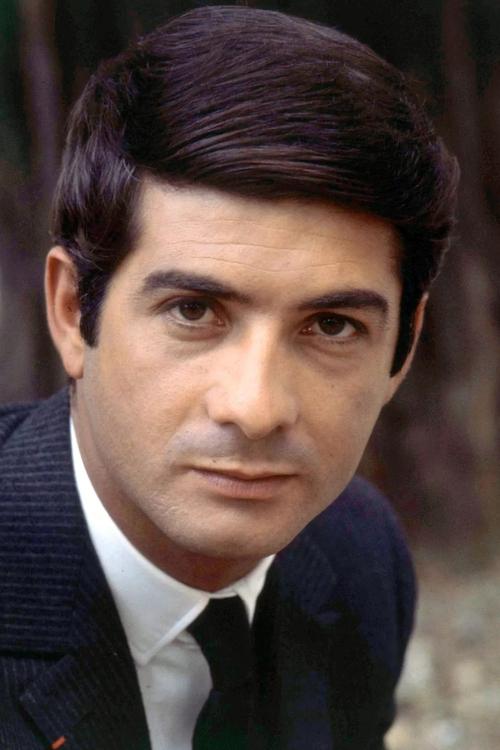
Jean-Claude Brialy
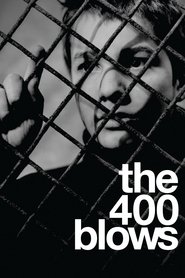
Jean-Claude Brialy (30 March 1933 – 30 May 2007) was a French actor and film director. Brialy was born in Aumale (now Sour El-Ghozlane), French Algeria, where his father was stationed with the French Army. Brialy moved to mainland France with his family in 1942. He was an alumnus of the Prytanée National Militaire. When he was 21 years old, he went to Paris to work as an actor. In 1956, Brialy acted in his first role in the short film Le coup du berger (Fool's Mate) by Jacques Rivette. By the late 1950s, he'd become one of the most prolific actors in the French nouvelle vague and a star. He appeared in films of nouvelle vague directors such as Claude Chabrol (Le Beau Serge, 1958; Les Cousins, 1959), Louis Malle (Ascenseur pour l'échafaud, 1958; Les Amants, 1958), François Truffaut (Les 400 Coups, 1959), Jean-Luc Godard, (Une femme est une femme, 1961), Éric Rohmer (Claire's Knee, 1970), as well as in films of other filmmakers such as Jean Renoir (Elena et les hommes 1958), Roger Vadim (La ronde, 1964), Philippe de Broca (Le Roi de cœur, 1966), Luis Buñuel (Le Fantôme de la liberté, 1974), and Claude Lelouch (Robert et Robert, 1978). In 2006, he appeared in his last role, as the eponymous character of the TV film Monsieur Max, directed by Gabriel Aghion. Godard described him as "the French Cary Grant," while Brialy's self-described "life models" had reportedly been actor Sacha Guitry and director Jean Cocteau. Brialy directed a number of films, including Églantine in 1971, which was loosely inspired by his own memories of a happy childhood spent in Chambellay with his grandparents, and Les volets clos (Closed shutters) in 1972. He owned the restaurant L'Orangerie, on the Île Saint-Louis; he'd also worked as a TV presenter, a singer, and a radio host. During the presentation of one of his books, Brialy described himself this way: "I'm a boy who got lucky enough to do what I love in life". Brialy, in 1959, acquired a château in the commune of Monthyon, near Paris. There, he accommodated and entertained many friends from the cinema and the theatre, such as Jean Marais, Pierre Arditi, and Romy Schneider whom he'd met during the 1958 production of the film Christine. Schneider, after the 1981 fatal accident of her son David, found a "refuge from the paparazzi" in Brialy's home. French singer Barbara would often sing at the piano. Director Jean-Pierre Melville used the château to shoot the last scenes of his 1970 crime film Le Cercle Rouge, where Alain Delon and Yves Montand are killed by the police. In his books, the autobiographical Le Ruisseau des singes (The river of monkeys) (2000) and the memoir J'ai oublié de vous dire (I Forgot to Tell You) (2004), Brialy revealed that he was bisexual. ... Source: Article "Jean-Claude Brialy" from Wikipedia in English, licensed under CC-BY-SA.
Jean-Claude Brialy (30. März 1933 – 30. Mai 2007) war ein französischer Schauspieler und Filmregisseur. Brialy wurde in Aumale (heute Sour El-Ghozlane), Französisch-Algerien, geboren, wo sein Vater als Angehöriger der französischen Armee stationiert war. 1942 zog Brialy mit seiner Familie nach Frankreich. Er war Absolvent der Prytanée National Militaire. Mit 21 Jahren ging er nach Paris, um als Schauspieler zu arbeiten. 1956 spielte Brialy seine erste Rolle in dem Kurzfilm „Le coup du berger“ (Der Narrenkumpel) von Jacques Rivette. Ende der 1950er-Jahre war er einer der produktivsten Schauspieler der französischen Nouvelle Vague und ein Star. Er spielte in Filmen von Nouvelle-Vague-Regisseuren wie Claude Chabrol (Le Beau Serge, 1958; Les Cousins, 1959), Louis Malle (Ascenseur pour l'échafaud, 1958; Les Amants, 1958), François Truffaut (Les 400 Coups, 1959), Jean-Luc Godard (Une femme est une femme, 1961), Éric Rohmer (Claires Knie, 1970) sowie in Filmen anderer Filmemacher wie Jean Renoir (Elena et les hommes, 1958), Roger Vadim (La ronde, 1964), Philippe de Broca (Le Roi de cœur, 1966), Luis Buñuel (Le Fantôme de la liberté, 1974) und Claude Lelouch (Robert et Robert, 1978). 2006 spielte er seine letzte Rolle als Titelfigur in dem Fernsehfilm „Monsieur Max“ unter der Regie von Gabriel Aghion. Godard bezeichnete ihn als „den französischen Cary Grant“, während Brialy sich selbst als Vorbilder nannte und angeblich den Schauspieler Sacha Guitry und den Regisseur Jean Cocteau nannte. Brialy führte bei mehreren Filmen Regie, darunter „Églantine“ (1971), der lose von seinen Erinnerungen an eine glückliche Kindheit bei seinen Großeltern in Chambellay inspiriert war, und „Les volets clos“ (1972). Er besaß das Restaurant L’Orangerie auf der Île Saint-Louis und arbeitete außerdem als Fernsehmoderator, Sänger und Radiomoderator. Bei der Präsentation eines seiner Bücher beschrieb sich Brialy so: „Ich bin ein Junge, der das Glück hatte, das zu tun, was er liebt.“ 1959 erwarb Brialy ein Schloss in der Gemeinde Monthyon bei Paris. Dort beherbergte und bewirtete er zahlreiche Freunde aus Film und Theater, darunter Jean Marais, Pierre Arditi und Romy Schneider, die er 1958 bei den Dreharbeiten zu dem Film „Christine“ kennengelernt hatte. Nach dem tödlichen Unfall ihres Sohnes David 1981 fand Schneider in Brialys Haus einen Zufluchtsort vor den Paparazzi. Die französische Sängerin Barbara sang oft am Klavier. Regisseur Jean-Pierre Melville nutzte das Schloss für die Dreharbeiten der letzten Szenen seines Kriminalfilms „Le Cercle Rouge“ (1970), in dem Alain Delon und Yves Montand von der Polizei getötet werden. In seinen Büchern, dem autobiografischen Roman „Le Ruisseau des singes“ (Der Fluss der Affen) (2000) und den Memoiren „J’ai oublié de vous dire“ (Ich habe vergessen, es Ihnen zu sagen) (2004), offenbarte Brialy, dass er bisexuell ist.
Actor y realizador francés, nacido en Argelia. Fue una figura de la nouvelle vague y también una personalidad del teatro y de la vida mundana de París. Interpretó más de cien películas a lo largo de cinco décadas. Filmes como Le beau Serge y Les cousins, de Claude Chabrol; Une femme est une femme, de Jean-Luc Godard; Les cuatre cents coups y La mariée était en noir, de François Truffaut; Le genou de Claire, de Eric Rohmer, o L'ascenseur pour l'echafaud y Les amants, de Louis Malle. Ganador de dos premios Cesar, Brialy dirigió en 1972 Eglantine, su debut como director. Fue el protagonista de las primeras películas de Eric Rohmer, Jacques Rivette, François Truffaut o Jean-Luc Godard, sobre todo de sus primeros cortometrajes. Su carrera empezó en el teatro, como estudiante del conservatorio de Estrasburgo. Y nunca abandonó del todo esa forma de expresión, siendo propietario de dos teatros parisienses. Pero fue el cine quien le dio la popularidad, que él supo multiplicar gracias a sus dotes de relaciones públicas, de hombre que ponía amigos y proyectos en relación. Entre 1956 y 2006 intervino en más de un centenar de títulos, siempre en papeles distinguidos, casi siempre respaldando al protagonista. No podría existir sin su silueta de barba bien recortada, su voz pronunciando de forma sabrosa las frases más alambicadas o su silueta coronada por un sombrero de verano. La obligación se la creó él, como obligación decidió dirigir algunos largometrajes sensibles pero olvidables o unos libros de memorias repletos de detalles sobre su vida profesional o de la de otros actores así como sobre sus aventuras galantes, orientadas en su gran mayoría hacia el sexo masculino. Su extensa filmografía no explica la importancia del personaje.
Jean-Claude Brialy est un acteur, réalisateur, scénariste et écrivain français, né le 30 mars 1933 à Aumale, en Algérie, et mort le 30 mai 2007 à Monthyon (Seine-et-Marne). Issu de la Nouvelle Vague du cinéma français, il a joué dans plus de deux cents films au cours d'une carrière commencée en 1956 et a côtoyé de grands réalisateurs tels que Louis Malle, Claude Chabrol, François Truffaut ou Éric Rohmer mais aussi Philippe de Broca. Vedette (Le Beau Serge) ou second rôle, il a été nommé pour le César du meilleur acteur dans un second rôle avec Le Juge et l’Assassin en 1977 et l'a remporté avec Les Innocents en 1988.
Acting (127)

… and 67 more