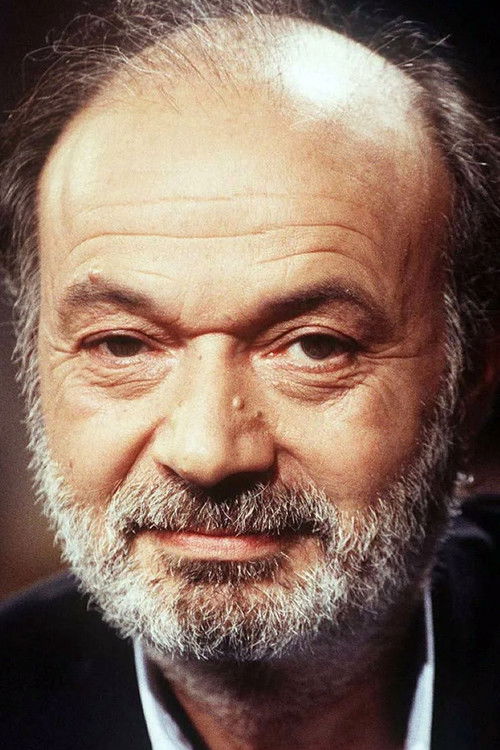
Claude Berri
Claude Berri (1 July 1934 – 12 January 2009) was a French film director, producer, screenwriter, distributor and actor. Berri was a leading figure of the French film industry both a director and as a producer. Following a short film that won an Academy Award, Berri achieved success with his first feature film, The Two of Us (1967). He then had a varied career, producing and distributing both mainstream and avant-garde films. During the 1970s, Berri's films as a director were mostly comedies but he later found increased success with several high-profile literary adaptations. In 1986, his two-part film Jean de Florette and Manon of the Spring won public and critical acclaim, becoming his best-known work. He next directed Uranus (1990) and most notably Germinal (1993). In 1997, he directed the historical biopic Lucie Aubrac. Directors whose films were produced by Berri include Roman Polanski, Jacques Demy, Jean-Jacques Annaud, Claude Sautet, Miloš Forman, Claude Zidi, Jacques Rivette, Patrice Chéreau, Alain Chabat, Abdellatif Kechiche and Dany Boon. Born Claude Beri Langmann in Paris, Berri was the son of Jewish immigrant parents. His mother, Beila (née Bercu), was from Romania, and his father, Hirsch Langmann, was a furrier from Poland. In 1943, during the Nazi occupation of France, Berri's parents entrusted him for his safety to a family in the countryside. He spent the rest of the occupation being fostered by "an antisemitic couple" who were unaware that he was Jewish. His sister, screenwriter and editor Arlette Langmann, was born after the war. Berri's original vocation was to be an actor. He began a career in the early 1950s but struggled to find roles, which prompted him to turn to directing and eventually producing. In 1965, he gained notice for The Chicken, which won the Award for best short film at the 38th Academy Awards. In 1967, Berri directed The Two of Us (Le Vieil homme et l'enfant), a partially autobiographical film that told the story of a Jewish child, entrusted during World War II to a benevolent and antisemitic old farmer who remains unaware that the boy he is caring for is a Jew. The film was a great success in France and abroad. Berri also adapted the story into a novel, released the same year as the film. During the years that followed, Berri became active as a producer and film distributor while continuing to direct his own films. Also in 1967, with his associate (later brother-in-law) Jean-Pierre Rassam, Berri bought the international distribution rights for Miloš Forman's The Firemen's Ball which was a great success and was nominated to the Academy Award for Best International Feature Film. Berri's company, Renn Productions, which he had founded to produce The Two of Us, gradually became a major player in the French film industry. ... Source: Article "Claude Berri" from Wikipedia in English, licensed under CC-BY-SA.
Claude Berri (1. Juli 1934 – 12. Januar 2009) war ein französischer Filmregisseur, Produzent, Drehbuchautor, Verleiher und Schauspieler. Berri zählte als Regisseur und Produzent zu den prägenden Figuren der französischen Filmindustrie. Nach einem Kurzfilm, der mit einem Oscar ausgezeichnet wurde, feierte er mit seinem ersten Spielfilm „Wir zwei“ (1967) große Erfolge. Es folgte eine vielseitige Karriere, in der er sowohl Mainstream- als auch Avantgarde-Filme produzierte und vertrieb. In den 1970er-Jahren drehte Berri hauptsächlich Komödien, später feierte er größere Erfolge mit mehreren hochkarätigen Literaturverfilmungen. 1986 erntete sein zweiteiliger Film „Jean de Florette und Manon des Frühlings“ großen Beifall von Publikum und Kritikern und wurde zu seinem bekanntesten Werk. Anschließend führte er Regie bei „Uranus“ (1990) und insbesondere bei „Germinal“ (1993). 1997 inszenierte er das historische Biopic „Lucie Aubrac“. Zu den Regisseuren, deren Filme von Berri produziert wurden, gehören Roman Polanski, Jacques Demy, Jean-Jacques Annaud, Claude Sautet, Miloš Forman, Claude Zidi, Jacques Rivette, Patrice Chéreau, Alain Chabat, Abdellatif Kechiche und Dany Boon. Berri, geboren als Claude Beri Langmann in Paris, war der Sohn jüdischer Einwanderer. Seine Mutter, Beila (geb. Bercu), stammte aus Rumänien, sein Vater, Hirsch Langmann, war Kürschner aus Polen. 1943, während der deutschen Besatzung Frankreichs, übergaben Berris Eltern ihn zu seinem Schutz einer Familie auf dem Land. Er verbrachte den Rest der Besatzungszeit in der Obhut eines antisemitischen Ehepaares, das nichts von seiner jüdischen Herkunft wusste. Seine Schwester, die Drehbuchautorin und Cutterin Arlette Langmann, wurde nach dem Krieg geboren. Berris ursprünglicher Berufswunsch war Schauspieler. Er begann seine Karriere in den frühen 1950er Jahren, hatte aber Schwierigkeiten, Rollen zu finden, was ihn dazu veranlasste, sich der Regie und schließlich der Produktion zuzuwenden. 1965 erlangte er Bekanntheit mit „The Chicken“, der bei den 38. Academy Awards als bester Kurzfilm ausgezeichnet wurde. 1967 führte Berri Regie bei „Le Vieil homme et l'enfant“ (Wir beide), einem teils autobiografischen Film, der die Geschichte eines jüdischen Kindes erzählt, das während des Zweiten Weltkriegs einem gutmütigen, aber antisemitischen alten Bauern anvertraut wird. Dieser ahnt nicht, dass der Junge Jude ist. Der Film war ein großer Erfolg in Frankreich und im Ausland. Berri adaptierte die Geschichte auch zu einem Roman, der im selben Jahr wie der Film erschien. In den folgenden Jahren war Berri neben seiner Tätigkeit als Regisseur auch als Produzent und Filmverleiher aktiv. Ebenfalls 1967 erwarb Berri zusammen mit seinem Geschäftspartner (späteren Schwager) Jean-Pierre Rassam die internationalen Vertriebsrechte für Miloš Formans „Der Feuerwehrball“, der ein großer Erfolg wurde und für den Oscar als bester internationaler Film nominiert war. Berris Firma Renn Productions, die er zur Produktion von „Wir zwei“ gegründet hatte, entwickelte sich nach und nach zu einem wichtigen Akteur der französischen Filmindustrie.
Director, productor, guionista y actor francés, a quien se debe buena parte de los éxitos del cine de este país de los últimos años. Su verdadero nombre era Claude Langmann, uno de esos fenómenos del cine capaces de ser valiosos en todas sus facetas y con fino olfato profesional. Una de sus primeras películas como director, El viejo y el niño (1967), autobiográfica, narraba las peripecias de un niño judío recogido por una familia antisemita durante la II Guerra Mundial, siendo aplaudida con entusiasmo por un joven François Truffaut, ya que la película le había producido un placer intenso. Sin embargo, no todos los críticos de su generación compartieron el mismo juicio. Siguieron otras películas de tintes autobiográficos, Mazel Tov o el matrimonio (1969), Le pistonné (1970), junto al cómico Coluche; Sex-Shop (1972) y Papá, ya no soy virgen (1976), que bastantes críticos consideraron frías y académicas. Claude Berri, como director, no fue siempre querido por la crítica francesa, a pesar de títulos tan notables como La venganza de Manon (1985), El manantial de las colinas (Jean de Florette, 1986) o Germinal (1993), consideradas como las más caras del cine francés, y a pesar también del enorme éxito de público que lograron y de los premios que obtuvieron. Sus trabajos fueron seleccionados numerosas veces para distintos galardones. En este sentido, su carrera no pudo comenzar mejor, obteniendo el Oscar al mejor cortometraje por Le poulet en 1962, su primer filme. Es cierto que sus películas como director miraban ante todo a la taquilla, mientras que como productor respetaba el trabajo ajeno, aunque, eso sí, con talante de hombre autoritario. El león del cine francés, como se le conocía, o el padrino, según otros, fue un cineasta completo, uno de esos insustituibles monstruos del cine, figura que en nuestros días va desapareciendo, cuando se reemplaza a los productores de verdad por simples financieros.
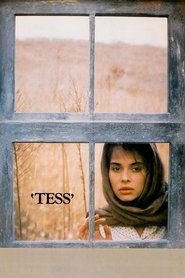
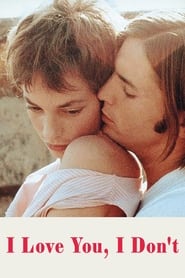
Claude Langmann, dit Claude Berri, né le 1er juillet 1934 à Paris et mort dans la même ville le 12 janvier 2009, est un réalisateur, scénariste, producteur de cinéma et acteur français. Surnommé «le dernier nabab» ou «le parrain» du cinéma français, il est considéré comme l'un des grands réalisateurs (Tchao Pantin, Jean de Florette et Manon des sources, Je vous aime) et producteurs de films (Tess, L'Ours, Astérix et Obélix: Mission Cléopâtre, Bienvenue chez les Ch'tis) du cinéma français. Il est également président de la Cinémathèque française de 2003 à 2007. Amateur averti d'art moderne et contemporain, il y consacre l'Espace Claude Berri, ouvert à Paris de 2008 à 2009. Claude Beri Langmann est issu d'une famille juive ashkénaze. Il est le fils d'un fourreur polonais, Hirsch Langmann, et d'une ouvrière roumaine, Beila Bercu, installés au 8 passage du Désir, dans le 10e arrondissement de Paris. Pendant la Seconde Guerre mondiale, il est caché par Raymonde Letournel. Il exerce brièvement le métier paternel, tout en suivant des cours de théâtre où il se lie avec Gérard Lebovici. Claude Beri abandonne son patronyme Langmann pour «Berri» quand il devient acteur: Beri est la traduction faite par l’état civil de son prénom roumain Berel. Il joue pour la première fois au théâtre dans les Mardis du théâtre Caumartin, sous la direction de Jacques Pierre (devenu réalisateur de télévision) et Jacques Ruisseau. Il interprète «le fils», dans Tchin-Tchin, de et avec François Billetdoux, au théâtre de Poche de Paris. Dans cette pièce de théâtre, il se lie d'amitié avec la comédienne Katharina Renn, qui inspirera le nom pour sa société de production. Il fonde et dirige également la société de production Films 7, qui rejoindra également le périmètre de Pathé en 2005. Elle compte nombre de classiques du cinéma français: Les Ripoux, Ripoux contre ripoux, Astérix et Obélix contre César… Il tourne le court métrage de fiction Le Poulet qui lui vaut l'Oscar du meilleur court métrage en prises de vues réelles en 1966. Il gagne ensuite le concours Naissance d'une Étoile devant Jacques Ruisseau, ce qui lui offre un rôle dans La Vérité de Henri-Georges Clouzot avec Brigitte Bardot, la jeune comédienne Marie Laforêt gagnant, pour sa part, le 1er prix de ce concours, et un rôle principal du Plein Soleil de René Clément. ... Source: Article "Claude Berri" de Wikipédia en français, soumis à la licence CC-BY-SA.
Directing (23)
Acting (33)


Crew (66)





… and 6 more
Writing (23)