Xi Jinping
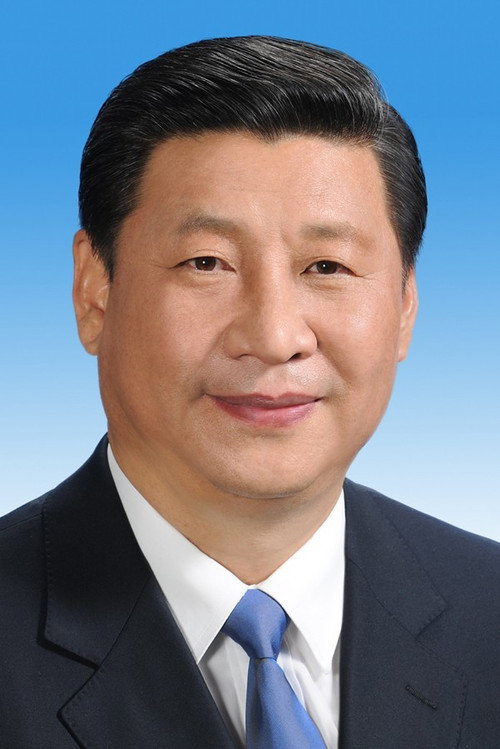
Xi Jinping (born 15 June 1953) is a Chinese politician and statesman who has been the paramount leader of China since 2012. He serves as general secretary of the Chinese Communist Party (CCP) and chairman of the Party’s Central Military Commission, positions he assumed in 2012, and became president of the People’s Republic of China and chairman of the state military commission in 2013. He is widely regarded as the leading figure of China’s fifth generation of leadership. Xi was born in Beijing as the son of Xi Zhongxun, a veteran revolutionary figure, and Qi Xin. During the Cultural Revolution, his father was purged, and Xi was sent to the rural village of Liangjiahe in Shaanxi province as part of the “sent-down youth” movement. There, he lived in a cave dwelling known as a yaodong, performed manual labor, and later became a local party secretary. After several unsuccessful attempts, he joined the CCP. He later studied chemical engineering at Tsinghua University as a worker-peasant-soldier student. Xi’s political career advanced through regional leadership roles, particularly in China’s coastal provinces. He served as governor of Fujian from 1999 to 2002, then moved to Zhejiang, where he was governor and later party secretary from 2002 to 2007. In 2007, he was briefly appointed party secretary of Shanghai following a political scandal. That same year, he entered the Politburo Standing Committee, the highest decision-making body in China, and became a leading figure in the party’s central leadership. In 2008, he was named vice president, and in 2010 he became vice chairman of the Central Military Commission, positioning him as successor to Hu Jintao. After assuming top leadership roles, Xi introduced extensive measures to strengthen party discipline and consolidate authority. His anti-corruption campaign targeted both high-ranking and lower-level officials, significantly reshaping the political landscape. He promoted the concept of “common prosperity,” aiming to reduce inequality, and implemented policies addressing poverty alleviation, economic restructuring, and technological development. His administration also increased the role of state-owned enterprises and emphasized national security and self-reliance. In foreign policy, Xi has taken a more assertive approach, particularly in relations with the United States, territorial disputes, and efforts to expand China’s global influence through initiatives like the Belt and Road Initiative. His leadership has also seen tighter control over Hong Kong following the introduction of a national security law in 2020, as well as heightened tensions with Taiwan. Domestically, Xi’s tenure has been marked by increased censorship, expanded surveillance systems, and controversial human rights policies, including actions in Xinjiang. He has overseen major reforms of the military and strengthened the CCP’s role across all areas of governance. In 2018, presidential term limits were removed, allowing him to extend his time in power, and in 2023 he secured a third term as president. His political ideology, known as Xi Jinping Thought, has been formally incorporated into both party and state constitutions, reflecting his central role in contemporary Chinese politics.
习近平(1953年6月15日出生)陕西富平人,1969年1月参加工作,1974年1月加入中国共产党,清华大学人文社会学院马克思主义理论与思想政治教育专业毕业,在职研究生学历,法学博士学位。 自2012年起担任中国共产党的总书记和中央军委主席,从而成为中国的最高领导人。自2013年起,他还担任中华人民共和国第七任国家主席。作为中国第五代领导集体的一员,习近平是中华人民共和国成立后出生的首位中国共产党总书记。现任中国共产党中央委员会总书记,中共中央军事委员会主席,中华人民共和国主席,中华人民共和国中央军事委员会主席
習近平(1953 年 6 月 15 日出生)陝西富平人,1969 年 1 月參加工作,1974 年 1 月加入中國共產黨,清華大學人文社會學院馬克思主義理論與思想政治教育專業畢業,在職研究生學歷,法學博士學位。 自 2012 年起擔任中國共產黨的總書記和中央軍委主席,從而成為中國的最高領導人。自 2013 年起,他還擔任中華人民共和國第七任國家主席。作為中國第五代領導集體的一員,習近平是中華人民共和國成立後出生的首位中國共產黨總書記。現任中國共產黨中央委員會總書記,中共中央軍事委員會主席,中華人民共和國主席,中華人民共和國中央軍事委員會主席
Acting (15)