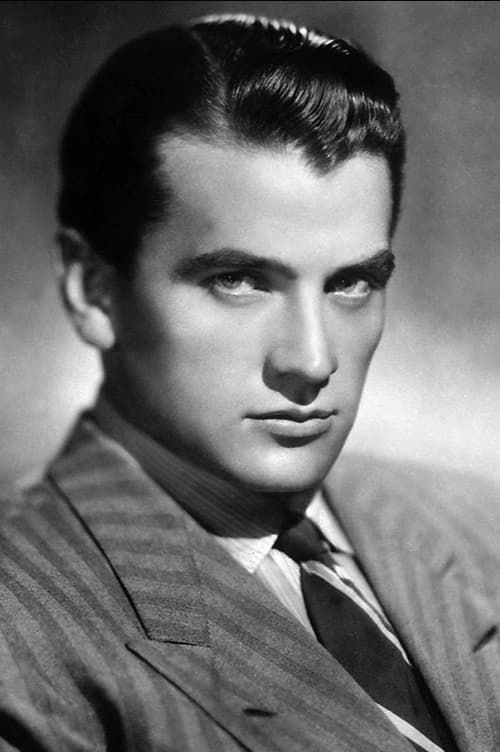
Massimo Girotti
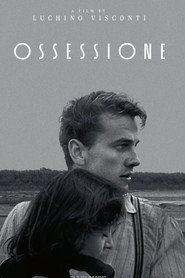
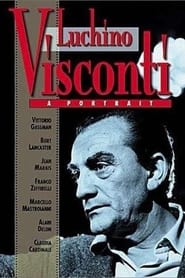
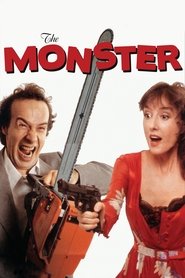
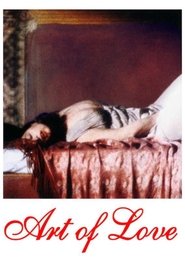
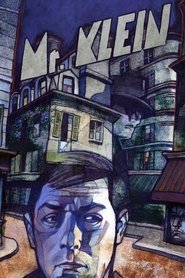
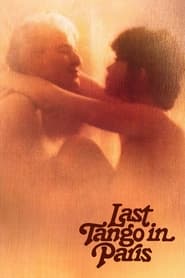
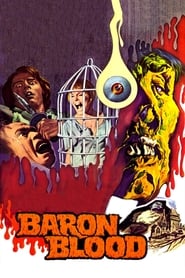
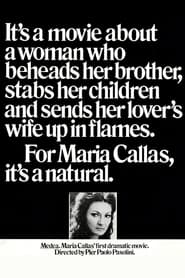
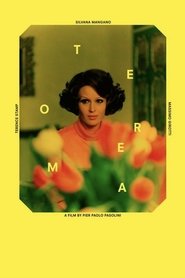
Massimo Girotti (18 May 1918 – 5 January 2003) was an Italian film actor whose career spanned seven decades. Born in Mogliano, in the province of Macerata, Girotti developed his athletic physique by swimming and playing polo. While studying engineering, he attracted the attention of Mario Soldati, who offered him a small part in the film Dora Nelson (1939), but it was not until later, in Alessandro Blasetti's La corona di ferro (The Iron Crown) (1941) and Roberto Rossellini's Un Pilota ritorna (A Pilot Returns) (1942), that he began to make an impression as a serious actor. In 1943 came a turning point in his career when Luchino Visconti cast him opposite the torrid Clara Calamai in Ossessione (Obsession), an earlier adaptation of the same novel on which Hollywood's The Postman Always Rings Twice is based. The film marked, in a sense, the birth of Italian neo-realism. Some of his notable post-war films include Caccia tragica (The Tragic Hunt) (1946) by Giuseppe De Santis and In nome della legge (1949) (In the Name of the Law) by Pietro Germi. In 1950, he starred opposite Lucia Bosé in Michelangelo Antonioni's first full-length feature, Cronaca di un amore (Story of a Love Affair) (1950). In 1953, he played Spartacus in an Italian epic film known in the US as Sins of Rome and then, returned to work again for Visconti, in Senso (1954), giving perhaps the finest performance of his career. In the years which followed, he appeared in many mainly Italian films for directors such as Lizzani, Bolognini, Vittorio Cottafavi, Lattuada, but it was not until 1968 that he once again played a role worthy of his talents - that of the father in Pasolini's Teorema (Theorem) with Terence Stamp and Silvana Mangano. Two years later, Pasolini cast him as Creonte opposite Maria Callas in his Medea (1969). In 1972, he was in Bernardo Bertolucci's Last Tango in Paris. That same year he made a rare appearance in a horror film when he agreed to a supporting role in Baron Blood as a favor to its director Mario Bava. He continued to act in character roles for the next thirty years. Some of the films he appeared in have been notable, including Joseph Losey's Monsieur Klein (1976) with Alain Delon and Jeanne Moreau, Art of Love (1983) by Walerian Borowczyk, the 1985 television miniseries Quo Vadis?, Roberto Benigni's Il mostro (The Monster) (1994). He died in Rome of a heart attack after having just completed his last film, Ferzan Özpetek's La Finestra di fronte (Facing Windows) (2003). Source: Article "Massimo Girotti" from Wikipedia in English, licensed under CC-BY-SA.
Massimo Girotti est un acteur italien, né le 18 mai 1918 à Mogliano, dans la province de Macerata située dans la région des Marches, et mort le 5 janvier 2003 à Rome. il est connu pour ses interprétations dans des films populaires et de grands réalisateurs. Né en 1918, champion de water-polo, Massimo Girotti poursuit des études d'ingénieur chimiste avant de devenir acteur de théâtre et de cinéma. Il est remarqué par le metteur en scène Luchino Visconti lors du tournage de Tosca, commencé par Jean Renoir en 1939 et repris plus tard par Carl Koch. En 1941, il doit interpréter, sous la direction de Visconti, le «farouche bandit Gramigna» aux côtés de Luisa Ferida mais le projet n'aboutit pas à cause du ministre de la Culture populaire de Mussolini, Alessandro Pavolini, qui en avait «assez des histoires de brigands». Visconti, «séduit par les yeux clairs et les brusques effarouchements» de Girotti, lui confie en 1942 le rôle du vagabond Gino dans Les Amants diaboliques (Ossessione), adaptation naturaliste du roman de James M. Cain, Le facteur sonne toujours deux fois, avec Clara Calamai (qui remplace Anna Magnani, initialement prévue, mais enceinte de son fils Luca). Selon Calamai: «Massimo fut peu à peu transformé; peu à peu nous le vîmes dompté.» Girotti lui-même témoigne: «Le dernier jour du tournage, je tombai à terre, évanoui, à bout de tension nerveuse et de fatigue.» Girotti a plusieurs fois témoigné, parfois de façon anonyme, de la dureté de son mentor, particulièrement au théâtre où il interprète sous la direction de Luchino Visconti le rôle d'Ajax dans une mise en scène monumentale de Troïlus et Cressida de William Shakespeare en 1949 (avec Paolo Stoppa, Rina Morelli, Vittorio Gassman et Marcello Mastroianni entre autres), Mademoiselle Julie de Strindberg, en 1957 aux côtés de Lilla Brignone, et Trofimov dans La Cerisaie de Tchekhov en 1965. Au cours de ses soixante-quatre ans de carrière (l'une des plus longues du cinéma italien), il joue dans 117 films avec les plus grands metteurs en scène italiens: Pier Paolo Pasolini, Alessandro Blasetti, Roberto Rossellini, Vittorio De Sica, Pietro Germi, Giuseppe De Santis, Luigi Zampa, Michelangelo Antonioni, Luigi Comencini, Carlo Lizzani, Alberto Lattuada, Carmine Gallone, Riccardo Freda, Mario Bava, Bernardo Bertolucci, Giuliano Montaldo, Ettore Scola, Liliana Cavani, ou encore Roberto Benigni. L'acteur passe ainsi des vétérans du muet à la jeune garde du cinéma italien d'après-guerre, du cinéma d'auteur au cinéma populaire; il tourne ainsi une dizaine de péplums, interprétant le sculpteur Praxitèle, le musicien Orphée, le poète Ovide ou le général Holopherne. Il tourne également sous la direction de nombreux cinéastes français: (Yves Allégret, Jean Grémillon, Claude Autant-Lara, Jean Delannoy, Josée Dayan, Robert Enrico), mais aussi Mikhaïl Kalatozov, André de Toth, Joseph Losey ou Walerian Borowczyk. Grand séducteur à l'écran, il a été le partenaire d'Alida Valli, Isa Miranda, Anna Magnani, Lucia Bosè, Silvana Mangano, Patricia Neal, Belinda Lee, Florinda Bolkan, Micheline Presle, Françoise Arnoul. ... Source: Article "Massimo Girotti" de Wikipédia en français, soumis à la licence CC-BY-SA.
Acting (120)





… and 60 more