Christian Carion
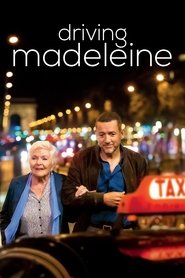
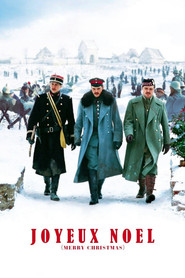
Christian Carion (born 4 January 1963) is a French film director, dialogue writer and screenwriter, gaining international attention for Joyeux Noël (Merry Christmas), which was nominated for several awards, including the 2005 Academy Award for Best Foreign Language Film. Christian Carion was born into a family of farmers in the north of France. Carion's youth was spent in his parents' farm fields, where he was constantly reminded of World War I as the family often found dangerous, unexploded shells left over from the conflicts in the fields. He had also heard of the stories in which French soldiers would leave their trenches at night to meet with their wives in the surrounding German-occupied towns and return to fight the next morning. After passing his baccalauréat, he joined an engineering school affiliated to the French ministry of agriculture. Later he decided to quit his scientific career and began shooting films he himself describes as "uninteresting". When he met Christophe Rossignon, both men started to collaborate in movie-making - Carion as film-maker and Rossignon as producer. In 1999, Rossignon also acted in Carion's short film Monsieur le député. In 2001, Carion directed his first feature film: Une hirondelle a fait le printemps (The Girl from Paris), the story, an hommage to his upbringing, tells the meeting of a brooding farmer, Michel Serrault, and a parisian girl seeking the calm of the countryside, played by Mathilde Seigner. The film attracted over 2.4 million of French moviegoers. Following this success, Carion started a more ambitious project, Joyeux Noël (Merry Christmas). Screened in Cannes for the film festival in 2005, this historic fiction film depicts the fraternizations of warriors from three different countries on the eve of Christmas during World War I. Carion stated that he'd never heard of the actual Christmas truce incidents while growing up in France, as the French Army and authorities suppressed them, having been viewed as an act of disobedience. He was introduced to the story via a historian who showed him photos and documents archived in France, Great Britain, and Germany. The film was a commercial success. It was nominated for numerous awards at the French César Awards and for the Oscar for Best Foreign Film. Two years later, he filmed another historic film; L'Affaire Farewell (Farewell), with Emir Kusturica and Guillaume Canet - a spy film set in Russia and based on true events. In 2014 he shot, on the roads of northern France, En mai, fais ce qu'il te plait. This movie is another historical piece about the exodus of millions of people in May 1940, when France was falling apart and the inhabitants of northern France were fleeing the German troops. Written using numerous recollections from the northern people, the film depicts the quest of a German dissident, looking for his son. The original music was composed by Ennio Morricone. Description above from the Wikipedia article Christian Carion, licensed under CC-BY-SA, full list of contributors on Wikipedia.
Director de cine francés. Se incorporó al Ministerio de Agricultura, al tiempo que cultivaba una pasión por el cine que había nacido en su más tierna adolescencia. Su encuentro con el productor Christophe Rossignon sería determinante. Alcanzó a dirigir su primer largometraje en 2001, La chica de París (Une hirondelle a fait le printemps, 2001), protagonizada por Michel Serrault y Mathilde Seigner, que en su estreno francés atrajo más de 2.4 millones de espectadores. En 2005, su segundo largometraje, Feliz Navidad (Joyeux Noël, 2005), una cinta histórica dedicada al hecho cierto de una confraternización entre tropas enemigas que tuvo lugar en las trincheras de 1914, en el curso de la "Gran Guerra", alcanzó los dos millones de espectadores en su estreno francés, y recibió toda suerte de aplausos en su presentación en la selección oficial del Festival de Cannes de 2005. En el 2009 dirigió su tercer largometraje, El caso Farewell, un affaire de espionaje considerado por Ronald Reagan el caso más importante del siglo XX, que protagonizaron Guillaume Canet y Emir Kusturica, para quien el film significó su papel cinematográfico de mayor envergadura.
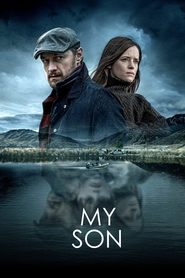
Christian Carion est un réalisateur et scénariste français né le 4 janvier 1963 à Cambrai (Nord). Né de parents agriculteurs, Christian Carion développe une passion pour le cinéma dès l'âge de treize ans. Après un bac C et une classe prépa, il intègre une école d'ingénieur au ministère de l'Agriculture (ENGEES), respectant ainsi les souhaits de sa famille. Se décidant ensuite à se consacrer au septième art, il loue une caméra vidéo, se met à faire des films "sans intérêt" selon ses dires, puis fait la rencontre de Christophe Rossignon, c'est à ce moment-là que commence sa carrière de producteur. Ce dernier sera d'ailleurs l'interprète d'un de ses courts métrages, Monsieur le député, en 1999. En 2001, Christian Carion passe au long-métrage, dirigeant le tandem Michel Serrault - Mathilde Seigner dans Une hirondelle a fait le printemps, une forme d'hommage à ses origines qui séduit 2,4 millions de spectateurs français. Fort de ce succès, le cinéaste s'attaque à un projet plus ambitieux, commencé en 1993: Joyeux Noël. Présentée Hors Compétition au Festival de Cannes 2005, cette fresque historique sur fond de Première Guerre mondiale réunit un casting franco-allemand composé notamment de Guillaume Canet, Diane Kruger et Daniel Brühl. En 2006, ce long métrage sera nommé à plusieurs reprises aux César et représente la France en 2006 pour la course à l'Oscar du Meilleur film étranger. Il crée alors l'association «Noël 14», qui porte la création du monument des fraternisations. Fidèle à ses comédiens, Christian Carion retrouvera deux ans après Guillaume Canet pour le propulser au cœur de L'Affaire Farewell, un thriller d'espionnage inspiré de faits réels et également interprété par Emir Kusturica. En 2014 il filme, sur les routes du Nord-Pas-de-Calais, En mai, fais ce qu'il te plaît. Un film historique qui conte l'histoire de millions de Nordistes jetés sur les routes en mai 1940 par l'arrivée des troupes allemandes sur le territoire français. Basé sur de nombreux témoignages recueillis auprès des Nordistes, le film déroule l'histoire d'un Allemand qui tente de retrouver son fils, embarqué dans l'exode par les villageois de Lebucquière. La musique du film est signée d'Ennio Morricone. Il retourne six jours derrière la caméra en 2016 pour le tournage de son prochain long-métrage, intitulé Mon garçon. Il signe lui-même le remake en anglais, My Son, sorti en 2021. Ces deux films présentent une particularité: l'acteur principal (Guillaume Canet puis James McAvoy) ne connait pas le script ni les dialogues et doit improviser chaque scène en fonction des autres acteurs et des situations. En 2016, Christian Carion est président du comité de sélection de l'aide à la post-production de la société Lumières Numériques. Source: Article "Christian Carion" de Wikipédia en français, soumis à la licence CC-BY-SA.